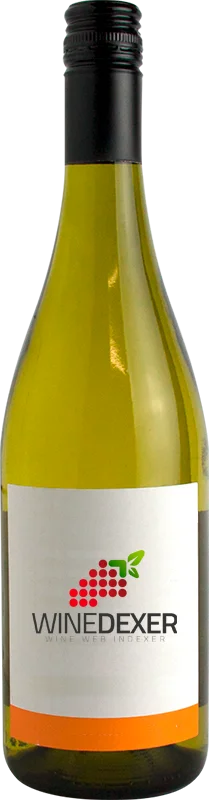
Winery Les Vins du PontetSélection Le Sauvignon Blanc
 White wine
This wine generally goes well with vegetarian, rich fish (salmon, tuna etc) or shellfish.
Food and wine pairings with Sélection Le Sauvignon Blanc
Pairings that work perfectly with Sélection Le Sauvignon Blanc



Original food and wine pairings with Sélection Le Sauvignon Blanc
The Sélection Le Sauvignon Blanc of Winery Les Vins du Pontet matches generally quite well with dishes of rich fish (salmon, tuna etc), shellfish or vegetarian such as recipes of tuna brick (light), crab matoutou or zucchini quiche.
Details and technical informations about Winery Les Vins du Pontet's Sélection Le Sauvignon Blanc.
Discover the grape variety: Red Globe
Obtained in the United States (California) in 1957 by Harold P. Olmo and Albert T. Koyama by crossing (hunisa x emperor) with (hunisa x emperor x nocera). It is found in the United States (California, ...), Spain, Portugal, Italy (Sicily, ...), Turkey, Chile, Argentina, South Africa, ... in France, it is not known, registered since the 03.05.2010 in the official catalogue list A2.
Informations about the Winery Les Vins du Pontet
The Winery Les Vins du Pontet is one of of the world's greatest estates. It offers 10 wines for sale in the of Vaud to come and discover on site or to buy online.

The wine region of Vaud
Vaud is Switzerland's second-largest wine region, located in the French-speaking southwest. The region - which is also one of 26 cantons in the country - is best known for its crisp, white Fendant wines (the national name for the Chasselas variety) and its stunning lakeside landscapes. Both of these reach their zenith in the grand crus of Lavaux/dezaley">Dezaley and Calamin. These famous Lavaux Vineyard terraces, which rise steeply up above Lake Geneva (Lac Léman), are considered of such importance that they are now enjoy protected status as a UNESCO World Heritage Site.
The word of the wine: Rootstock
American vine on which a French vine is grafted. This is the consequence of the phylloxera that destroyed the vineyard at the end of the 19th century: after much trial and error, it was discovered that the "pest" spared the roots of the American vines, and the technique became widespread.