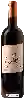
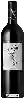
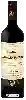
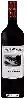
Winery Les Chevaliers de LanezacMontagne Saint-Émilion
 Red wine
This wine generally goes well with poultry, beef or game (deer, venison).

Food and wine pairings with Montagne Saint-Émilion
Pairings that work perfectly with Montagne Saint-Émilion



Original food and wine pairings with Montagne Saint-Émilion

The Montagne Saint-Émilion of Winery Les Chevaliers de Lanezac matches generally quite well with dishes of beef, lamb or game (deer, venison) such as recipes of beef tongue with pickle sauce, lamb mouse with onions and red wine or duck breast with apples.
Details and technical informations about Winery Les Chevaliers de Lanezac's Montagne Saint-Émilion.
Discover the grape variety: Pedro Ximenez
Exceptional, intensely sweet liqueur wines with a very dark mahogany robe, a syrupy palate, and powerful signature aromas of raisin, dried fig, date, molasses, roasted coffee, dark chocolate, liquorice and oxidative notes. Produced from sun-dried grapes. The undisputed star of Andalusian Pedro Ximénez (PX), one of the world's greatest sweet wines. Autochthonous Spanish variety from Andalusia (Montilla-Moriles DO, Jerez DO).
Informations about the Winery Les Chevaliers de Lanezac
The Winery Les Chevaliers de Lanezac is one of of the world's greatest estates. It offers 5 wines for sale in the of Montagne-Saint-Émilion to come and discover on site or to buy online.

The wine region of Montagne-Saint-Émilion
Largest satellite of Saint-Émilion on the Bordeaux right bank (1,507 ha, AOC 1936): rich, silky reds dominated by Merlot (~75%, ripe fruit, velvety texture) with spicy Cabernet Franc (~20%) and Cabernet Sauvignon. Deep ruby robe, a nose of red and black fruits, pepper, undergrowth and plum, a structured tannic finish evolving towards leather and tobacco. Clay-limestone and gravel soils on plateau and slopes, an accessible alternative to Saint-Émilion for the everyday cellar.
The wine region of Bordeaux
World-renowned age-worthy reds, led by round Merlot (plum, black fruit) or firm Cabernet Sauvignon (blackcurrant, cedar, graphite), blended with Cabernet Franc and Petit Verdot for tannic structure. Structured Médoc and Graves, velvety Saint-Émilion and Pomerol. Also crisp dry whites (Sauvignon/Sémillon) and opulent sweet Sauternes with honey and candied fruit. A 110,000 ha Gironde vineyard, 65 appellations, cradle of the 1855 classified growths.
The word of the wine: Presses
The juice that results from pressing the grapes after fermentation. At the end of the maceration, the vats are emptied, the first juice obtained is called the free-run wine and the marc remaining at the bottom of the vat is then pressed to give the press wine. We say more quickly "the presses". Their quality varies according to the vintage and the maceration. A too vigorous extraction releases the tannins of pips and the wine of press can then prove to be very astringent. Often the winemaker raises it separately, deciding later whether or not to incorporate it totally or partially into the grand vin.