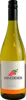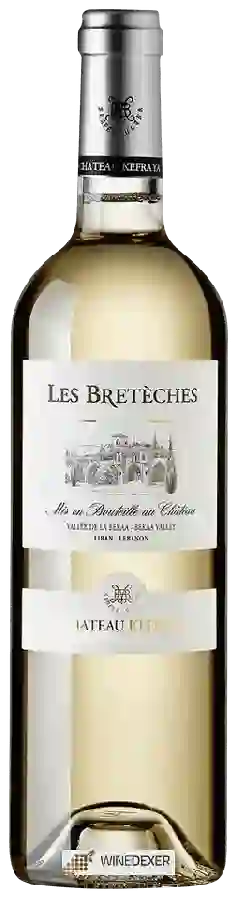
Château KefrayaLes Bretèches White
 White wine



This wine generally goes well with

Wine flavors and olphactive analysis





On the nose the Les Bretèches White of Château Kefraya in the region of Bekaa Valley often reveals types of flavors of grapefruit, citrus or apples and sometimes also flavors of lemon, stone or elderflower.
Details and technical informations about Château Kefraya's Les Bretèches White.
Discover the grape variety: Lameiro
Lively, fruity whites to drink young with a pale golden robe, an airy, low-alcohol palate with marked acidity, and signature aromas of citrus (lemon), green apple, white flowers and fresh herbal notes. A nervy, thirst-quenching profile. Very little-known, used locally in traditional Vinho Verde DOC blends, preserved for its patrimonial interest. A Portuguese white grape grown in the Monção sub-region of northern Minho.
Last vintages of this wine
The best vintages of Les Bretèches White from Château Kefraya are 2015, 2018, 2014, 2016 and 2017.
Informations about the Château Kefraya
The Château Kefraya is one of of the world's great estates. It offers 43 wines for sale in the of Bekaa Valley to come and discover on site or to buy online.

The wine region of Bekaa Valley
Lebanese high-altitude valley (~1,000 m), ~6,000 years of winegrowing, ~90% of the country's wine. Complex, age-worthy reds with signature notes of black cherry, blackberry, garrigue, leather, cedar, oriental spices and a balsamic touch, firm tannins and long ageing — Cabernet for backbone, supple Cinsault, dense Carignan, fruity Grenache, peppery Syrah. Native whites Merwah and Obaideh, taut and mineral. Iconic Chateau Musar.
The word of the wine: Extra raw
Champagne dosed between 0 and 6 grams of sugar (see dosage liqueur).