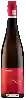
Winery Laufener AltenbergNo. 5 Edition Nebbiolo Trocken
 Red wine


This wine generally goes well with beef, veal or lamb.
Food and wine pairings with No. 5 Edition Nebbiolo Trocken
Pairings that work perfectly with No. 5 Edition Nebbiolo Trocken



Original food and wine pairings with No. 5 Edition Nebbiolo Trocken


The No. 5 Edition Nebbiolo Trocken of Winery Laufener Altenberg matches generally quite well with dishes of beef, lamb or veal such as recipes of melt-in-the-mouth pork tenderloin casserole, languedoc-roussillon lamb en papillote and its tajine with... or orloff roast.
Details and technical informations about Winery Laufener Altenberg's No. 5 Edition Nebbiolo Trocken.
Discover the grape variety: Nebbiolo
A very old grape variety grown in the Italian Piedmont. It has a great resemblance with the Freisa, which also comes from the same Italian region. Among the various massal selections made in Italy, we find lampia, michet and rosé. It can be found in Italy, Austria, Bulgaria, Cyprus, Greece, Mexico, the United States (California), Australia, etc. In France, it is practically unknown, perhaps because it is a delicate and demanding grape variety with, among other things, a fairly long phenological cycle.
Last vintages of this wine

The best vintages of No. 5 Edition Nebbiolo Trocken from Winery Laufener Altenberg are 0, 2015, 2014
Informations about the Winery Laufener Altenberg
The Winery Laufener Altenberg is one of of the world's greatest estates. It offers 59 wines for sale in the of Baden to come and discover on site or to buy online.

The wine region of Baden
Baden is the southernmost of Germany's 13 official wine regions. It is also the warmest. Its relatively sunny, DryClimate permits the production of good-quality Spätburgunder (Pinot Noir) and ripe, relatively Full-bodied">Full-bodied examples of Grauburgunder (Pinot Gris) and Weissburgunder (Pinot Blanc). These are often made in oaked styles.
The word of the wine: Local wine
Table wine, but with the origin indicated. It corresponds to a particular legislation: the freedom to use grape varieties is greater than for the AOC, but the quality criteria such as the approval tastings can sometimes be more demanding. The legislation is still evolving, but for the moment there are three levels: regional (e.g. Vin de Pays d'Oc), departmental and local (e.g. Côtes de Thongue).