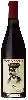
Winery LarocheMas la Chevalière Roqua Blanca
 Red wine


In the mouth this red wine is a powerful with a nice balance between acidity and tannins.
This wine generally goes well with beef, veal or pasta.

Taste structure of the Mas la Chevalière Roqua Blanca from the Winery Laroche
Light | Bold | |
Smooth | Tannic | |
Dry | Sweet | |
Soft | Acidic |
In the mouth the Mas la Chevalière Roqua Blanca of Winery Laroche in the region of Languedoc-Roussillon is a powerful with a nice balance between acidity and tannins.
Food and wine pairings with Mas la Chevalière Roqua Blanca
Pairings that work perfectly with Mas la Chevalière Roqua Blanca



Original food and wine pairings with Mas la Chevalière Roqua Blanca
The Mas la Chevalière Roqua Blanca of Winery Laroche matches generally quite well with dishes of beef, pasta or veal such as recipes of romazava (madagascar), homemade italian lasagna or alsatian wine pie.
Details and technical informations about Winery Laroche's Mas la Chevalière Roqua Blanca.
Discover the grape variety: Nocera
Structured and elegant reds with a light to intense ruby colour, soft to firm tannins and silky palate, with signature aromas of red fruit (cherry, morello cherry), plum, sweet spices, Mediterranean garrigue and saline notes. A fresh, sunny Sicilian profile. Traditional component of blends in the Mamertino di Milazzo DOC appellation, signing the viticultural heritage of the province of Messina. An indigenous Italian black variety from Sicily.
Last vintages of this wine

The best vintages of Mas la Chevalière Roqua Blanca from Winery Laroche are 2013, 0, 2016
Informations about the Winery Laroche
The Winery Laroche is one of of the world's great estates. It offers 84 wines for sale in the of Languedoc to come and discover on site or to buy online.

The wine region of Languedoc
Sunny, generous southern reds: spicy, peppery Syrah, round, candied Grenache (ripe fruit, garrigue), deep Mourvèdre, structured Carignan, supple Cinsault. From robust Corbières and Minervois to fresher Terrasses du Larzac, via Faugères on schist or taut Pic Saint-Loup. Lively, iodised Picpoul de Pinet whites (oysters), ample Roussanne and Marsanne. 14 sub-appellations, ~10,000 ha in regional AOC.
The wine region of Languedoc-Roussillon
Largest single French vineyard, dominated by sunny, generous reds. Spicy Syrah, candied Grenache (ripe fruit, garrigue), structured Carignan, deep Mourvèdre, supple Cinsault. Stars: structured Corbières, Minervois, Faugères, Saint-Chinian; round Côtes-du-Roussillon. Legendary vins doux naturels: Banyuls and Maury (fortified Grenache) with notes of cocoa, fig, prune.
The word of the wine: Size
Cutting of shoots to regulate and balance the growth of the vine in order to control productivity.