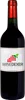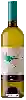
Winery La PieveTrebbiano di Toscana
 White wine
In the mouth this white wine is a with a nice freshness.
This wine generally goes well with vegetarian, appetizers and snacks or lean fish.
Taste structure of the Trebbiano di Toscana from the Winery La Pieve
Light | Bold | |
Dry | Sweet | |
Soft | Acidic |
In the mouth the Trebbiano di Toscana of Winery La Pieve in the region of Tuscany is a with a nice freshness.
Food and wine pairings with Trebbiano di Toscana
Pairings that work perfectly with Trebbiano di Toscana



Original food and wine pairings with Trebbiano di Toscana


The Trebbiano di Toscana of Winery La Pieve matches generally quite well with dishes of pasta, vegetarian or appetizers and snacks such as recipes of succulent and easy to make beef lasagna, quiche lorraine or fresh vegetable dips and their sauces for the aperitif.
Details and technical informations about Winery La Pieve's Trebbiano di Toscana.
Discover the grape variety: Chancellor
Cross between 5163 Seibel (2 Gaillard x 2510 Seibel) and 880 Seibel (28112 Couderc x 2003 Seibel) obtained by Albert Seibel (1844-1936). It was the first direct-producing hybrid cultivated in France and has now practically disappeared. It can still be found in a few old vines in the form of isolated strains. It can be found in the United States (New York, etc.) and in Canada, where it is part of the grape varieties grown on a large number of vineyards.
Informations about the Winery La Pieve
The Winery La Pieve is one of of the world's great estates. It offers 60 wines for sale in the of Tuscany to come and discover on site or to buy online.

The wine region of Tuscany
Tuscany is one of the most famous and prolific wine regions in Europe. It is best known for its Dry red wines made from Sangiovese grapes, which dominate production. These include Chianti, Brunello di Montalcino and Vino Nobile di Montepulciano. The region's Vin Santo is also highly prized, as are its passito dessert wines, though these are produced in comparatively tiny quantities.
The word of the wine: Consistency
In tasting, it is the equivalent of chewing (the chewiness of a tannic red wine is also mentioned). We then speak of firmness, fluidity, softness, hardness, and why not the crunchiness of an early wine by reference to the grape.