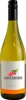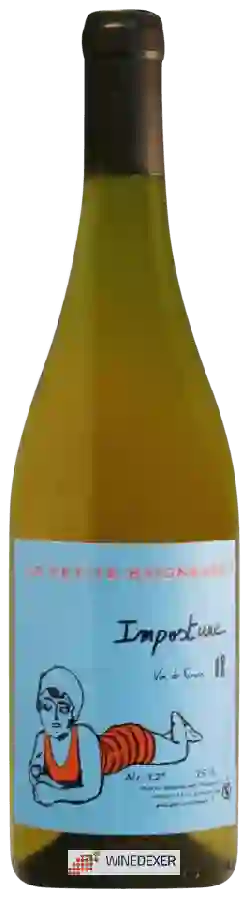
Winery La Petite BaigneuseImposture Blanc de Noir
 White wine



This wine generally goes well with beef and mature and hard cheese.

Food and wine pairings with Imposture Blanc de Noir
Pairings that work perfectly with Imposture Blanc de Noir


Original food and wine pairings with Imposture Blanc de Noir
The Imposture Blanc de Noir of Winery La Petite Baigneuse matches generally quite well with dishes of beef or mature and hard cheese such as recipes of tournedos rossini with port sauce or truffle from auvergne.
Details and technical informations about Winery La Petite Baigneuse's Imposture Blanc de Noir.
Discover the grape variety: Silcher
Aromatic and lively whites to drink young, with a pale golden robe, an airy palate with preserved acidity on muscat-like aromas, white flowers, citrus (lemon) and floral notes. Also as off-dry wines. Grown on very small surfaces in Germany, remains confidential and appreciated for dry and off-dry aromatic wines. German white variety bred at Geisenheim (Riesling × Bukettrebe), late and productive.
Last vintages of this wine
The best vintages of Imposture Blanc de Noir from Winery La Petite Baigneuse are 2018, 2017
Informations about the Winery La Petite Baigneuse
The Winery La Petite Baigneuse is one of of the world's greatest estates. It offers 16 wines for sale in the of Vin de France to come and discover on site or to buy online.

The wine region of Vin de France
The freest category of French wine, the playground of winemakers working outside the AOC. All styles combined: fruity reds, lively or ambitious whites, everyday rosés, unusual blends, natural wines, atypical grapes (Petit Manseng in Languedoc, Riesling in Provence), experimental winemaking (skin-contact whites, no sulphur). Grape and vintage labelling allowed, no geographic constraint. From the pop, convivial cuvée to the artisan gem: freedom in a bottle.
The word of the wine: Chaptalization
The addition of sugar at the time of fermentation of the must, an ancient practice, but theorized by Jean-Antoine Chaptal at the dawn of the 19th century. The sugar is transformed into alcohol and allows the natural degree of the wine to be raised in a weak or cold year, or - more questionably - when the winegrower has a harvest that is too large to obtain good maturity.