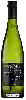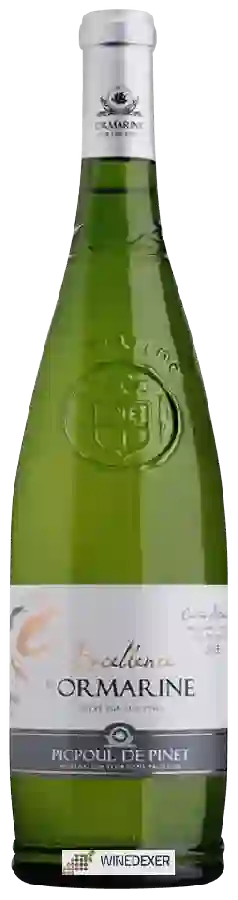
Cave de l'OrmarinePicpoul de Pinet Eleve sur Lies Fines
 White wine


In the mouth this white wine is a .
This wine generally goes well with vegetarian, poultry or lean fish.
Taste structure of the Picpoul de Pinet Eleve sur Lies Fines from the Cave de l'Ormarine
Light | Bold | |
Dry | Sweet | |
Soft | Acidic |
In the mouth the Picpoul de Pinet Eleve sur Lies Fines of Cave de l'Ormarine in the region of Languedoc-Roussillon is a .
Wine flavors and olphactive analysis




On the nose the Picpoul de Pinet Eleve sur Lies Fines of Cave de l'Ormarine in the region of Languedoc-Roussillon often reveals types of flavors of citrus, apples or butter and sometimes also flavors of green apple, apricot or lemon.
Food and wine pairings with Picpoul de Pinet Eleve sur Lies Fines
Pairings that work perfectly with Picpoul de Pinet Eleve sur Lies Fines



Original food and wine pairings with Picpoul de Pinet Eleve sur Lies Fines


The Picpoul de Pinet Eleve sur Lies Fines of Cave de l'Ormarine matches generally quite well with dishes of pasta, vegetarian or poultry such as recipes of spaghetti with salmon, mushroom, bacon and gruyere quiche or chicken colombo (west indies).
Details and technical informations about Cave de l'Ormarine's Picpoul de Pinet Eleve sur Lies Fines.
Discover the grape variety: Aglianico
A very old grape variety grown in Italy, some believe it to be of Greek origin. In France, it is practically unknown. It can be found in Australia, the United States (California), Argentina, etc. It should not be confused with Aglianicone, another grape variety grown in Italy, which is, however, very similar to Aglianico.
Last vintages of this wine

The best vintages of Picpoul de Pinet Eleve sur Lies Fines from Cave de l'Ormarine are 2015, 2018, 2017, 2016 and 2014.
Informations about the Cave de l'Ormarine
The Cave de l'Ormarine is one of of the world's greatest estates. It offers 65 wines for sale in the of Picpoul de Pinet to come and discover on site or to buy online.

The wine region of Picpoul de Pinet
The wine region of Picpoul de Pinet is located in the region of Languedoc of Languedoc-Roussillon of France. Wineries and vineyards like the Domaine Julie Benau or the Domaine Domitia produce mainly wines white, red and sparkling. The most planted grape varieties in the region of Picpoul de Pinet are Chardonnay, Mourvèdre and Folle blanche, they are then used in wines in blends or as a single variety. On the nose of Picpoul de Pinet often reveals types of flavors of grapefruit, salt or fennel and sometimes also flavors of banana, guava or passion fruit.
The wine region of Languedoc-Roussillon
Languedoc (formerly Coteaux du Languedoc) is a key appellation used in the Languedoc-Roussillon wine region of southern France. It covers Dry table wines of all three colors (red, white and rosé) from the entire region, but leaves Sweet and Sparkling wines to other more specialized appellations. About 75% of all Languedoc wines are red, with the remaining 25% split roughly down the middle between whites and rosés. The appellation covers most of the Languedoc region and almost a third of all the vineyards in France.
The word of the wine: Smoked
Qualifier of smells close to those of smoked food, characteristic, among other things, of the Sauvignon grape variety; hence the name of smoked white given to this variety.