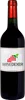
Weingut KnaußS Spätburgunder
 Red wine



In the mouth this red wine is a with a nice freshness.
This wine generally goes well with poultry, beef or veal.

Taste structure of the S Spätburgunder from the Weingut Knauß
Light | Bold | |
Smooth | Tannic | |
Dry | Sweet | |
Soft | Acidic |
In the mouth the S Spätburgunder of Weingut Knauß in the region of Württemberg is a with a nice freshness.
Food and wine pairings with S Spätburgunder
Pairings that work perfectly with S Spätburgunder



Original food and wine pairings with S Spätburgunder

The S Spätburgunder of Weingut Knauß matches generally quite well with dishes of beef, veal or game (deer, venison) such as recipes of beef tongue with mushrooms, wiener schnitzel or viennese schnitzel or quinoa patties with courgettes and fresh goat cheese.
Details and technical informations about Weingut Knauß's S Spätburgunder.
Discover the grape variety: Rolle
Structured, aromatic whites with an ample mouth and fresh acidity, featuring aromas of citrus (grapefruit, lemon), pear, white flesh fruits, white flowers, fennel and typical marine saline notes. Slightly bitter finish on citrus peel. The absolute signature of great Provence whites (Côtes de Provence AOC, Bellet AOC), a pillar of Corsican whites (Patrimonio AOC, Ajaccio AOC) and present in Languedoc. The French name for Italian Vermentino, native Mediterranean grape.
Last vintages of this wine
The best vintages of S Spätburgunder from Weingut Knauß are 2011, 2009, 0, 2016 and 2014.
Informations about the Weingut Knauß
The Weingut Knauß is one of of the world's great estates. It offers 61 wines for sale in the of Württemberg to come and discover on site or to buy online.

The wine region of Württemberg
Rare predominantly red region in Germany (nearly 70%). Supple, fruity everyday reds: light, crisp Trollinger (Schiava) with red fruits, more structured, spicy, deep Lemberger (Blaufränkisch), generous Schwarzriesling (Pinot Meunier). Riesling king of whites (>2,000 ha), lively and mineral, citrus and green apple. Germany's 4th region (11,500 ha) on the Neckar slopes around Heilbronn and Stuttgart.
The word of the wine: Vinification of sweet wines
Moelleux and liquoreux wines are characterized by the presence of residual sugars (natural sugar of the grape), not transformed into alcohol under the effect of yeasts. The fermentation is stopped by cold and by the addition of sulphur dioxide (sulphur).