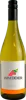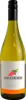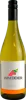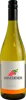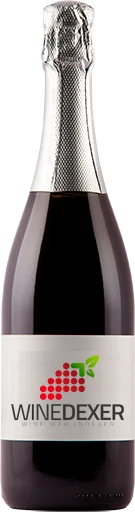
Cave Kientzheim Kaysersberg - Anne BoecklinGold Tropfa Crémant d'Alsace Brut
 Sparkling wine
This wine generally goes well with poultry, appetizers and snacks or lean fish.
Food and wine pairings with Gold Tropfa Crémant d'Alsace Brut
Pairings that work perfectly with Gold Tropfa Crémant d'Alsace Brut



Original food and wine pairings with Gold Tropfa Crémant d'Alsace Brut


The Gold Tropfa Crémant d'Alsace Brut of Cave Kientzheim Kaysersberg - Anne Boecklin matches generally quite well with dishes of shellfish, poultry or appetizers and snacks such as recipes of blanquette of the sea, mediterranean cake with parmesan and coppa gratin or tuna rillettes.
Details and technical informations about Cave Kientzheim Kaysersberg - Anne Boecklin's Gold Tropfa Crémant d'Alsace Brut.
Discover the grape variety: Persan
Persan noir is a grape variety that originated in France (Savoie). It produces a variety of grape specially used for wine making. It is rare to find this grape to eat on our tables. This variety of grape is characterized by small bunches and small grapes. The Persan Noir can be found in several vineyards: South-West, Cognac, Bordeaux, Savoie & Bugey, Provence & Corsica, Rhone Valley, Loire Valley, Beaujolais.
Informations about the Cave Kientzheim Kaysersberg - Anne Boecklin
The Cave Kientzheim Kaysersberg - Anne Boecklin is one of of the world's great estates. It offers 87 wines for sale in the of Crémant d'Alsace to come and discover on site or to buy online.

The wine region of Crémant d'Alsace
Crémant d'Alsace is the appellation for white and rosé Sparkling wines from the Alsace wine region in northeastern France. Introduced in August 1976, the appellation now accounts for about a quarter of the region's production, or about 45 million bottles per year, up from 31 million in 2009. Outside of Champagne (240km to the west), it is the dominant French sparkling wine appellation, with more than half of all crémant production. The cooperatives are the most important players, with Wolfberger alone producing 6 to 7 million bottles.
The wine region of Alsace
Alsace, located in the extreme north-east of France, is Distinguished from other French wine regions by its strong Franco-Germanic influences. These influences are the result of a back-and-forth between the German and French sovereignties over the last few centuries. They can be seen not only in the architecture and culture of Alsace, but also in the wines. Alsace wines are produced under three main appellations: Alsace and Alsace Grand Cru for still white wines (Sweet and Dry), and Crémant d'Alsace for Sparkling wines.
The word of the wine: Organic (agriculture)
A type of agriculture (and therefore viticulture) based on respect for living organisms and biological cycles, and which excludes the use of synthetic treatment products and synthetic fertilizers. Organic farming is guaranteed by the respect of a set of specifications.