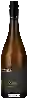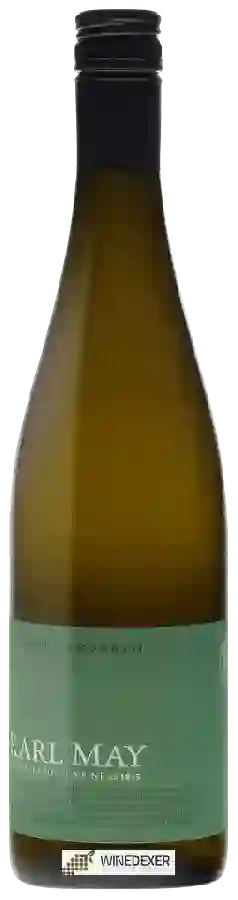
Winery Karl MaySilvaner Trocken
 White wine


In the mouth this white wine is a with a nice freshness.
This wine generally goes well with pork, vegetarian or poultry.
Taste structure of the Silvaner Trocken from the Winery Karl May
Light | Bold | |
Dry | Sweet | |
Soft | Acidic |
In the mouth the Silvaner Trocken of Winery Karl May in the region of Rheinhessen is a with a nice freshness.
Wine flavors and olphactive analysis

On the nose the Silvaner Trocken of Winery Karl May in the region of Rheinhessen often reveals types of flavors of earth, tree fruit.
Food and wine pairings with Silvaner Trocken
Pairings that work perfectly with Silvaner Trocken



Original food and wine pairings with Silvaner Trocken


The Silvaner Trocken of Winery Karl May matches generally quite well with dishes of veal, pork or vegetarian such as recipes of veal chops au gratin, pork roulades with cream and mushrooms or quiche lorraine.
Details and technical informations about Winery Karl May's Silvaner Trocken.
Discover the grape variety: Sabalkanskoï
It is believed to be native to the Black Sea coast or the Azov Sea in the Balkans. It can be found in the United States, Australia, North Africa, Egypt, Turkey, Italy, etc. It is virtually unknown in France, perhaps because it matures too late and with difficulty.
Last vintages of this wine

The best vintages of Silvaner Trocken from Winery Karl May are 2018, 0, 2014, 2015
Informations about the Winery Karl May
The Winery Karl May is one of of the world's great estates. It offers 69 wines for sale in the of Rheinhessen to come and discover on site or to buy online.

The wine region of Rheinhessen
71% white region: Riesling is king (5,000 ha), dry to off-dry, ripe yellow fruit, apple, citrus and fine saline minerality. Supple, floral Müller-Thurgau for everyday, the world's largest Silvaner plantation with herbaceous, straight notes. Historic cradle of off-sweet Liebfraumilch. Some supple reds (Dornfelder, Spätburgunder).
The word of the wine: Assemblage (Champagne)
In Champagne, it is the art of blending still wines from different grape varieties (pinot meunier, pinot noir, chardonnay), from different terroirs (villages, areas) and often from different years. The incorporation of older wines, called reserve wines, allows for greater aromatic complexity.