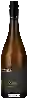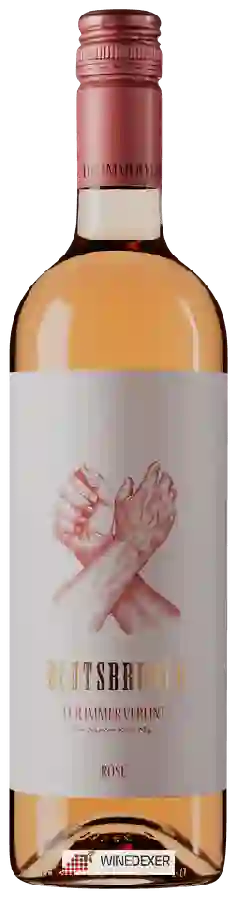
Winery Karl MayBlutsbruder Für Immer Vereint Rosé
 Pink wine



This wine is a blend of 2 varietals which are the Cabernet-Sauvignon and the Merlot.
This wine generally goes well with vegetarian, poultry or beef.

Food and wine pairings with Blutsbruder Für Immer Vereint Rosé
Pairings that work perfectly with Blutsbruder Für Immer Vereint Rosé



Original food and wine pairings with Blutsbruder Für Immer Vereint Rosé



The Blutsbruder Für Immer Vereint Rosé of Winery Karl May matches generally quite well with dishes of beef, lamb or game (deer, venison) such as recipes of beef with mustard, canned cassoulet or rabbit legs with fresh cream.
Details and technical informations about Winery Karl May's Blutsbruder Für Immer Vereint Rosé.
Discover the grape variety: Cabernet-Sauvignon
Structured, tannic reds, deeply coloured, with aromas of blackcurrant, blackberry, cedar, tobacco and graphite, underpinned by firm acidity and fine ageing potential. Cornerstone of the great Médoc estates (Pauillac, Saint-Estèphe, Saint-Julien) and signature of Napa Valley, Coonawarra and Maipo. The world's most planted red variety, a natural cross of Cabernet Franc x Sauvignon Blanc born in Bordeaux.
Last vintages of this wine
The best vintages of Blutsbruder Für Immer Vereint Rosé from Winery Karl May are 0
Informations about the Winery Karl May
The Winery Karl May is one of of the world's great estates. It offers 69 wines for sale in the of Rheinhessen to come and discover on site or to buy online.

The wine region of Rheinhessen
71% white region: Riesling is king (5,000 ha), dry to off-dry, ripe yellow fruit, apple, citrus and fine saline minerality. Supple, floral Müller-Thurgau for everyday, the world's largest Silvaner plantation with herbaceous, straight notes. Historic cradle of off-sweet Liebfraumilch. Some supple reds (Dornfelder, Spätburgunder).
The word of the wine: Round
Said of a wine that is harmonious and smooth, offering no harshness in the mouth.