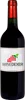
Winery Karl Joh. MolitorAssmannshäuser Höllenberg Spätburgunder Trocken
 Red wine


In the mouth this red wine is a with a nice freshness.
This wine generally goes well with poultry, beef or veal.
Taste structure of the Assmannshäuser Höllenberg Spätburgunder Trocken from the Winery Karl Joh. Molitor
Light | Bold | |
Smooth | Tannic | |
Dry | Sweet | |
Soft | Acidic |
In the mouth the Assmannshäuser Höllenberg Spätburgunder Trocken of Winery Karl Joh. Molitor in the region of Rheingau is a with a nice freshness.
Food and wine pairings with Assmannshäuser Höllenberg Spätburgunder Trocken
Pairings that work perfectly with Assmannshäuser Höllenberg Spätburgunder Trocken



Original food and wine pairings with Assmannshäuser Höllenberg Spätburgunder Trocken

The Assmannshäuser Höllenberg Spätburgunder Trocken of Winery Karl Joh. Molitor matches generally quite well with dishes of beef, veal or game (deer, venison) such as recipes of beef tagliata with truffle oil, tête de veau sauce moi or rabbit with prunes.
Details and technical informations about Winery Karl Joh. Molitor's Assmannshäuser Höllenberg Spätburgunder Trocken.
Discover the grape variety: Bobal
This grape variety is widely cultivated in Spain under the name béni carlo. It was introduced into the Languedoc-Roussillon region of Narbonne around 1870.
Last vintages of this wine
The best vintages of Assmannshäuser Höllenberg Spätburgunder Trocken from Winery Karl Joh. Molitor are 0
Informations about the Winery Karl Joh. Molitor
The Winery Karl Joh. Molitor is one of of the world's great estates. It offers 51 wines for sale in the of Rheingau to come and discover on site or to buy online.

The wine region of Rheingau
Rheingau is one of the most important of Germany's 13 Anbaugebiete wine regions. However it is far from the biggest; with 3,076 hectares (7,600 acres) of Vineyard">Vineyards documented in 2012, its output is around one tenth of that from the Pfalz and Rheinhessen regions. Located on the Rhine a 20-minute drive west of Frankfurt, the -gau suffix denotes that it was once a county of the Frankish Empire. The classic Rheingau wine is a DryRiesling with pronounced Acidity and aromas of citrus fruits and smoke-tinged minerality – typically more "masculine" than its equivalent from the Mosel.
The word of the wine: Local wine
Table wine, but with the origin indicated. It corresponds to a particular legislation: the freedom to use grape varieties is greater than for the AOC, but the quality criteria such as the approval tastings can sometimes be more demanding. The legislation is still evolving, but for the moment there are three levels: regional (e.g. Vin de Pays d'Oc), departmental and local (e.g. Côtes de Thongue).