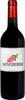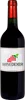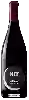
Winery Julia BernetTreso Vi Negre
 Red wine
In the mouth this red wine is a powerful.
This wine generally goes well with poultry, beef or veal.
Taste structure of the Treso Vi Negre from the Winery Julia Bernet
Light | Bold | |
Smooth | Tannic | |
Dry | Sweet | |
Soft | Acidic |
In the mouth the Treso Vi Negre of Winery Julia Bernet in the region of Catalogne is a powerful.
Food and wine pairings with Treso Vi Negre
Pairings that work perfectly with Treso Vi Negre



Original food and wine pairings with Treso Vi Negre

The Treso Vi Negre of Winery Julia Bernet matches generally quite well with dishes of beef, pasta or veal such as recipes of beef with balsamic sauce, pasta with ham or stuffed squid in the sétoise sauce.
Details and technical informations about Winery Julia Bernet's Treso Vi Negre.
Discover the grape variety: Ruby-cabernet
Intraspecific crossing carried out in 1936 by Doctor Harold Paul Olmo of the University of California in Davis (United States) between the carignan and the cabernet-sauvignon. The first plantings were made in 1948 in the United States (California). Today, it is less and less multiplied, but it can still be found in South Africa, Australia, Argentina, Chile, Uruguay, Yugoslavia, the United States, etc. In France, it is almost unknown.
Informations about the Winery Julia Bernet
The Winery Julia Bernet is one of of the world's greatest estates. It offers 12 wines for sale in the of Catalogne to come and discover on site or to buy online.

The wine region of Catalogne
Catalonia (Catalunya in Catalan and Cataluña in Spanish) is an autonomous community in the Northeast of Spain. It extends from the historic county (comarca) of Montsia in the South to the border with France in the north. The Mediterranean Sea forms its eastern border and offers 580 km of coastline. The Catalunya D.
The word of the wine: Tanin
A natural compound contained in the skin of the grape, the seed or the woody part of the bunch, the stalk. The maceration of red wines allows the extraction of tannins, which give the texture, the solidity and also the mellowness when the tannins are "ripe". The winemaker seeks above all to extract the tannins from the skin, the ripest and most noble. The tannins of the seed or stalk, which are "greener", especially in average years, give the wine hardness and astringency. The wines of Bordeaux (based on Cabernet and Merlot) are full of tannins, those of Burgundy much less so, with Pinot Noir containing little.