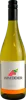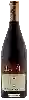
Winery Johannes HaasBlauer Spätburgunder Trocken
 Red wine


In the mouth this red wine is a with a nice freshness.
This wine generally goes well with poultry, beef or veal.
Taste structure of the Blauer Spätburgunder Trocken from the Winery Johannes Haas
Light | Bold | |
Smooth | Tannic | |
Dry | Sweet | |
Soft | Acidic |
In the mouth the Blauer Spätburgunder Trocken of Winery Johannes Haas in the region of Nahe is a with a nice freshness.
Food and wine pairings with Blauer Spätburgunder Trocken
Pairings that work perfectly with Blauer Spätburgunder Trocken



Original food and wine pairings with Blauer Spätburgunder Trocken

The Blauer Spätburgunder Trocken of Winery Johannes Haas matches generally quite well with dishes of beef, veal or game (deer, venison) such as recipes of authentic bolognese sauce (ragù di carne), sauté of veal with olives (corsica) or duck with vanilla (reunion island).
Details and technical informations about Winery Johannes Haas's Blauer Spätburgunder Trocken.
Discover the grape variety: Himrod
An interspecific cross between ontario (winchell x diamond) and sultana - it is therefore not a pure Vitis vinifera as some people write - created in 1928 by A.B. Stout at the New York State Agricultural Experimental Station (United States). Its multiplication started only in 1952, it is certainly known in the United States but also in Canada, in India, in many European wine-producing countries, ... little multiplied and thus little known in France except by the amateur gardeners. The Interlaken which looks a bit like the Himrod, the Lakemont and the Romulus have the same parents.
Last vintages of this wine
The best vintages of Blauer Spätburgunder Trocken from Winery Johannes Haas are 0
Informations about the Winery Johannes Haas
The Winery Johannes Haas is one of of the world's great estates. It offers 25 wines for sale in the of Nahe to come and discover on site or to buy online.

The wine region of Nahe
Nahe is one of the smaller German wine regions, named after the Nahe river which joins the Rhein at Rheinhessen/bingen">Bingen. The viticultural carea here is characterised by dramatic topography with steep slopes and craggy outcrops of metamorphic rock. Like most of the regions on or near the Rhine, its most prestigious wines are made from Riesling. There are around 4,000 hectares (10,000 acres) of Vineyards, spread across seven Grosslagen (wine districts) and over 300 Einzellagen (individual vineyard sites).
The word of the wine: Piccolo
Small bottle with a capacity of 20 centilitres.