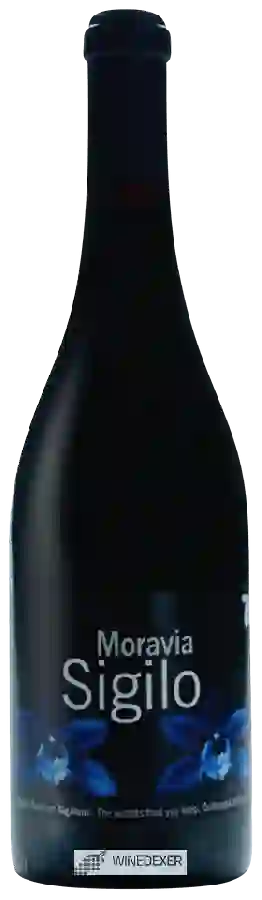
Bodegas RecueroMoravia Sigilo
 Red wine



In the mouth this red wine is a powerful with a nice freshness.
This wine generally goes well with poultry, beef or veal.
Taste structure of the Moravia Sigilo from the Bodegas Recuero
Light | Bold | |
Smooth | Tannic | |
Dry | Sweet | |
Soft | Acidic |
In the mouth the Moravia Sigilo of Bodegas Recuero in the region of Castille is a powerful with a nice freshness.
Food and wine pairings with Moravia Sigilo
Pairings that work perfectly with Moravia Sigilo



Original food and wine pairings with Moravia Sigilo

The Moravia Sigilo of Bodegas Recuero matches generally quite well with dishes of beef, pasta or veal such as recipes of navarin of the sea da gigi, spaghetti with shrimp and cream or sauté of doe stroganoff.
Details and technical informations about Bodegas Recuero's Moravia Sigilo.
Discover the grape variety: Elbling
Elbling blanc is a grape variety that originated in France. It produces a variety of grape specially used for wine making. It is rare to find this grape for eating on our tables. White Elbling can be found grown in these vineyards: South West, Cognac, Bordeaux, Provence & Corsica, Rhone Valley.
Last vintages of this wine
The best vintages of Moravia Sigilo from Bodegas Recuero are 2013, 2011, 0, 2012
Informations about the Bodegas Recuero
The Bodegas Recuero is one of of the world's greatest estates. It offers 17 wines for sale in the of Castille to come and discover on site or to buy online.

The wine region of Castille
Castilla-La Mancha is a large region located South and east of the Spanish capital, Madrid. Inexpensive table wines are produced from a variety of Grapes. Higher quality wines are increasingly available, but the region is traditionally known as a source of low quality bulk wine. More than half of Spain's grapes are grown here.
The word of the wine: Serious
A Bordeaux term for small pebbles from the Pyrenees, eroded, rounded and transported by the Garonne to Aquitaine. They are mainly found on the left bank in the area.... known as the Graves, and further downstream in the Médoc. By extension, gravel is found in other regions, brought by other rivers or even glaciers.