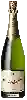
Winery Jaume SerraCava Organic Brut
 Sparkling wine



In the mouth this sparkling wine is a powerful with a nice vivacity and a fine and pleasant bubble.
This wine generally goes well with appetizers and snacks, lean fish or shellfish.
Taste structure of the Cava Organic Brut from the Winery Jaume Serra
Light | Bold | |
Soft | Acidic | |
Gentle | Fizzy |
In the mouth the Cava Organic Brut of Winery Jaume Serra in the region of Cava is a powerful with a nice vivacity and a fine and pleasant bubble.
Wine flavors and olphactive analysis




On the nose the Cava Organic Brut of Winery Jaume Serra in the region of Cava often reveals types of flavors of non oak, microbio or tree fruit and sometimes also flavors of spices, citrus fruit.
Food and wine pairings with Cava Organic Brut
Pairings that work perfectly with Cava Organic Brut



Original food and wine pairings with Cava Organic Brut


The Cava Organic Brut of Winery Jaume Serra matches generally quite well with dishes of shellfish, appetizers and snacks or lean fish such as recipes of soupions à la provençale, hummus (chickpea puree) or homemade fish burger with mozzarella shrimp salad.
Details and technical informations about Winery Jaume Serra's Cava Organic Brut.
Discover the grape variety: Canner seedless
Cross between hunisa and sultana obtained in 1931 in the United States by Professor Harold P. Olmo of the University of Davis (California). In France, this variety is almost unknown, but it is listed in the official catalogue of vine varieties intended for canning.
Last vintages of this wine
The best vintages of Cava Organic Brut from Winery Jaume Serra are 2019, 0
Informations about the Winery Jaume Serra
The Winery Jaume Serra is one of of the world's greatest estates. It offers 83 wines for sale in the of Cava to come and discover on site or to buy online.

The wine region of Cava
Cava is Spain's signature style of Sparkling wine, and the Iberian Peninsula's answer to Champagne. The traditional Grape varieties used in Cava were Macabeo, Parellada and Xarel-lo, but the Champagne varieties Chardonnay and Pinot Noir are also used. While the first Cava was produced exclusively in Catalonia - specifically in a small town called San Sadurní de Noya - modern Cava can be sourced from various regions of Spain. Aragon, Navarre, Rioja, Pais Vasco, Valencia and Extremadura have specific delimited areas that can benefit from the designation of origin.
The word of the wine: Cryo-extraction
This technique was very popular at the end of the 80's in Sauternes, a little less so now. The grapes are frozen before pressing, and the water transformed into ice remains in the marc, only the sugar flows out. As with the concentrators, the "cryo" can also increase bad taste and greenness.