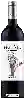
Winery J.P.HenriquesLa Linea Côtes du Roussillon
 Red wine
This wine generally goes well with beef, veal or pasta.
Food and wine pairings with La Linea Côtes du Roussillon
Pairings that work perfectly with La Linea Côtes du Roussillon



Original food and wine pairings with La Linea Côtes du Roussillon
The La Linea Côtes du Roussillon of Winery J.P.Henriques matches generally quite well with dishes of beef, pasta or veal such as recipes of veal shank with mushrooms, multicoloured butterfly pasta or tournedos rossini with port sauce.
Details and technical informations about Winery J.P.Henriques's La Linea Côtes du Roussillon.
Discover the grape variety: Floreal
A wine grape variety of the INRA-Resdur1 series with polygenic resistance (two genes for mildew and powdery mildew have been identified), resulting from an interspecific cross between Villaris and Mtp 3159-2-12 (for the latter, one of its parents is Vitis rotundifolia, which is resistant to Pierce's disease, mildew, grey rot, etc.). Little multiplied, it is registered in the Official Catalogue of wine grape varieties list A1.
Informations about the Winery J.P.Henriques
The Winery J.P.Henriques is one of of the world's great estates. It offers 28 wines for sale in the of Côtes du Roussillon to come and discover on site or to buy online.

The wine region of Côtes du Roussillon
Côtes du Roussillon is an appellation contrôlée for red, white and rosé wines from the Roussillon wine region in southern France. It covers the eastern half of the administrative district of the Pyrénées-Orientales, on the eastern edge of the Pyrenees. The western half of the Pyrenees-Orientales is simply too mountainous for effective viticulture. In the Côtes du Roussillon wine-growing area is the Aspres sub-region.
The wine region of Languedoc-Roussillon
Languedoc (formerly Coteaux du Languedoc) is a key appellation used in the Languedoc-Roussillon wine region of southern France. It covers Dry table wines of all three colors (red, white and rosé) from the entire region, but leaves Sweet and Sparkling wines to other more specialized appellations. About 75% of all Languedoc wines are red, with the remaining 25% split roughly down the middle between whites and rosés. The appellation covers most of the Languedoc region and almost a third of all the vineyards in France.
The word of the wine: Generous
Full-bodied, rich and open wine, in principle with a good alcohol content but without excess (in this case the wine is said to be warm).