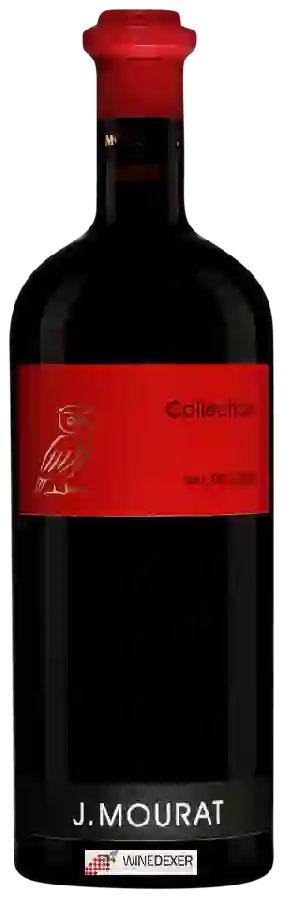
Winery J. MouratCollection Rouge
 Red wine



This wine is a blend of 4 varietals which are the Cabernet franc, the Cabernet-Sauvignon, the Négrette and the Pinot noir.
This wine generally goes well with pork, poultry or beef.

Wine flavors and olphactive analysis




On the nose the Collection Rouge of Winery J. Mourat in the region of Loire Valley often reveals types of flavors of cherry, red fruit or oak and sometimes also flavors of red fruit, black fruit.
Food and wine pairings with Collection Rouge
Pairings that work perfectly with Collection Rouge



Original food and wine pairings with Collection Rouge



The Collection Rouge of Winery J. Mourat matches generally quite well with dishes of beef, lamb or veal such as recipes of fondue bourguignonne and accompanying sauces, rack of lamb with antiboise sauce or duck breast with orange sauce.
Details and technical informations about Winery J. Mourat's Collection Rouge.
Discover the grape variety: Cabernet franc
Supple, fragrant reds with fine tannins and vibrant freshness, showing raspberry, violet, green pepper, pencil lead and gentle spice aromas. Star of the Loire as a single variety (Chinon, Bourgueil, Saumur-Champigny) and of the right bank of Bordeaux in blends (Cheval Blanc at 60%). Also in semi-dry Anjou rosés. A historic Bordeaux variety, parent of Cabernet-Sauvignon, Merlot and Carmenère.
Last vintages of this wine
The best vintages of Collection Rouge from Winery J. Mourat are 2018
Informations about the Winery J. Mourat
The Winery J. Mourat is one of of the world's great estates. It offers 56 wines for sale in the of Loire Valley to come and discover on site or to buy online.

The wine region of Loire Valley
Kingdom of lively, dry whites and fine sparklers. Mineral, taut Sauvignon Blanc (Sancerre, Pouilly-Fumé) with citrus and gunflint notes. Multiform Chenin Blanc (Vouvray, Savennières, Layon): straight dry, floral off-dry or noble sweet honey-quince. Saline, iodised Muscadet (Melon B.
The word of the wine: Hat
Solid part (marc), composed of pips and skins (sometimes of the stalk), which forms at the top of the tank during fermentation. The pigeage consists in breaking this cap to put back in suspension these elements and to favour the exchanges between the juice and the skins.