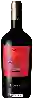
Winery MoserMangiapietre
 Red wine



In the mouth this red wine is a powerful with a lot of tannins present in the mouth.
This wine generally goes well with beef, game (deer, venison) or lamb.

Taste structure of the Mangiapietre from the Winery Moser
Light | Bold | |
Smooth | Tannic | |
Dry | Sweet | |
Soft | Acidic |
In the mouth the Mangiapietre of Winery Moser in the region of Veneto is a powerful with a lot of tannins present in the mouth.
Food and wine pairings with Mangiapietre
Pairings that work perfectly with Mangiapietre



Original food and wine pairings with Mangiapietre

The Mangiapietre of Winery Moser matches generally quite well with dishes of beef, pasta or lamb such as recipes of beef with dark beer, capellini with prosciutto or marinated lamb chops (honey, worcestershire sauce, olive oil).
Details and technical informations about Winery Moser's Mangiapietre.
Discover the grape variety: Balcic
Supple, fruity whites to drink young with a pale golden robe, an airy, low-alcohol palate with moderate acidity, and signature aromas of white-fleshed fruits (peach, pear), white flowers and light Muscat notes. Early-ripening. Grown in Dobrudja on the Romanian Black Sea coast, mainly destined for young consumption, it remains little-known outside its regions of origin. A Romanian white grape bred at Murfatlar by crossing with Riesling Italico.
Last vintages of this wine
The best vintages of Mangiapietre from Winery Moser are 2008, 2015, 0, 2013 and 2017.
Informations about the Winery Moser
The Winery Moser is one of of the world's greatest estates. It offers 28 wines for sale in the of Veneto to come and discover on site or to buy online.

The wine region of Veneto
World star of Prosecco: fresh, light Glera sparklers with notes of pear, green apple and white flowers, fruity, convivial bubbles. Veronese reds from Corvina and Rondinella: light, crisp Bardolino, fruity Valpolicella, opulent, concentrated Amarone DOCG (black cherry, chocolate, raisin) from dried grapes. Mineral, almondy Soave (Garganega) whites, fresh Pinot Grigio. 97,500 ha, Italy's largest production.
The word of the wine: Power
Character of a wine that is full-bodied, generous and has a rich bouquet.