Winery ImpresarioFlorica Cabernet Sauvignon
 Red wine


This wine generally goes well with poultry, beef or lamb.
Food and wine pairings with Florica Cabernet Sauvignon
Pairings that work perfectly with Florica Cabernet Sauvignon



Original food and wine pairings with Florica Cabernet Sauvignon

The Florica Cabernet Sauvignon of Winery Impresario matches generally quite well with dishes of beef, lamb or spicy food such as recipes of pasta bolognese, marinated lamb chops (honey, worcestershire sauce, olive oil) or spanish paella.
Details and technical informations about Winery Impresario's Florica Cabernet Sauvignon.
Discover the grape variety: Cabernet-Sauvignon
Cabernet-Sauvignon noir is a grape variety that originated in France (Bordeaux). It produces a variety of grape specially used for wine making. It is rare to find this grape to eat on our tables. This variety of grape is characterized by small bunches, and small grapes. Cabernet-Sauvignon noir can be found in many vineyards: South-West, Loire Valley, Languedoc & Roussillon, Cognac, Bordeaux, Armagnac, Rhone Valley, Provence & Corsica, Savoie & Bugey, Beaujolais.
Last vintages of this wine
The best vintages of Florica Cabernet Sauvignon from Winery Impresario are 0
Informations about the Winery Impresario
The Winery Impresario is one of of the world's great estates. It offers 13 wines for sale in the of Moldavie to come and discover on site or to buy online.

The wine region of Moldavie
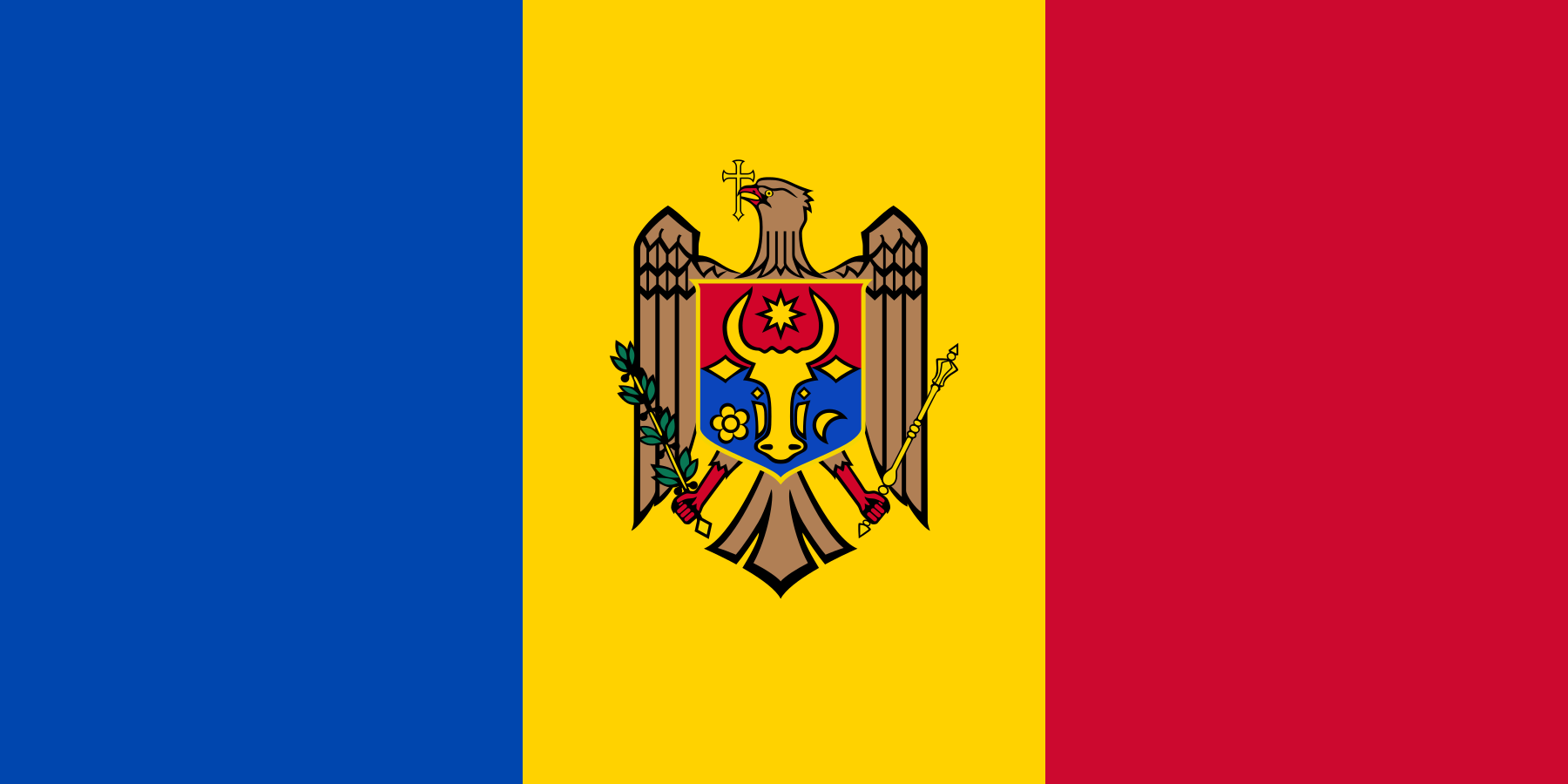
Moldova is a landlocked country in Eastern Europe, one of many former Soviet states in that region. It is separated from the western shores of the Black Sea by the province of Odessa in Southern Ukraine and Lies just North of Romania and Bulgaria). Moldova gained independence from Russia in 1991. It is now officially called the Republic of Moldova.
The word of the wine: Turbidity
The state of a cloudy wine, due to the presence of colloidal suspensions that prevent the passage of light.