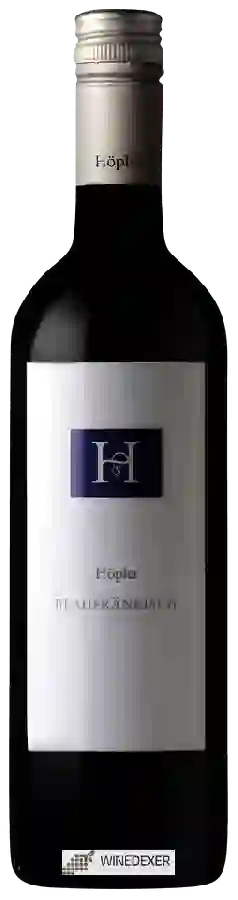
Winery HöplerBlaufränkisch
 Red wine



In the mouth this red wine is a powerful with a nice balance between acidity and tannins.
This wine generally goes well with poultry, beef or pasta.

Taste structure of the Blaufränkisch from the Winery Höpler
Light | Bold | |
Smooth | Tannic | |
Dry | Sweet | |
Soft | Acidic |
In the mouth the Blaufränkisch of Winery Höpler in the region of Weinland is a powerful with a nice balance between acidity and tannins.
Wine flavors and olphactive analysis






On the nose the Blaufränkisch of Winery Höpler in the region of Weinland often reveals types of flavors of non oak, earth or microbio and sometimes also flavors of vegetal, oak or spices.
Food and wine pairings with Blaufränkisch
Pairings that work perfectly with Blaufränkisch



Original food and wine pairings with Blaufränkisch
The Blaufränkisch of Winery Höpler matches generally quite well with dishes of beef, pasta or poultry such as recipes of korean bibimbap, generous flaky quiche or chicken nuggets.
Details and technical informations about Winery Höpler's Blaufränkisch.
Discover the grape variety: Mazuelo
Full-bodied, tannic reds with a dark ruby robe, firm tannins and a dense palate with preserved acidity, showing signature aromas of red fruits (cherry, raspberry), spice, pepper, Mediterranean garrigue and balsamic notes. Fine ageing potential, contributing structure and acidity to great Riojan reds. A traditional component of Rioja DOCa blends with Tempranillo. The Spanish synonym for Carignan, a Mediterranean variety originating in Aragon.
Last vintages of this wine
The best vintages of Blaufränkisch from Winery Höpler are 2015, 2013, 2014, 0 and 2017.
Informations about the Winery Höpler
The Winery Höpler is one of of the world's greatest estates. It offers 25 wines for sale in the of Burgenland to come and discover on site or to buy online.

The wine region of Burgenland
Cradle of great Austrian reds. Signature Blaufränkisch: structured, spicy reds with black fruits (blackberry, black cherry), firm tannins and lively acidity, mineral profile. More supple Zweigelt on red fruit. Lively Welschriesling, peppery Grüner Veltliner, round Chardonnay whites.
The wine region of Weinland
Vast German-speaking region in north-eastern Switzerland, the country's largest production area. Signature Pinot Noir (Blauburgunder): fine, fresh reds with notes of cherry, raspberry, undergrowth and sweet spices, silky tannins. Elegant, delicate style, often barrel-aged. Also light, floral Müller-Thurgau (Riesling-Sylvaner), lively, lemony native Räuschling, ample Pinot Gris.
The word of the wine: R-C (champagne)
Harvesting-cooperator. It is the cooperative which elaborates the champagne of its members from their mixed contributions. It gives them bottles on which they stick their own label. It is legal without being intellectually honest. When you walk around the Champagne region, you may come across signs that say "Vigneron récoltant" to indicate a member of a cooperative. You can always ask him where his vats and press are.


