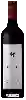
Winery HollickThe Gondolier Barbera
 Red wine



This wine generally goes well with pork, poultry or mild and soft cheese.
Wine flavors and olphactive analysis



On the nose the The Gondolier Barbera of Winery Hollick in the region of Australie du Sud often reveals types of flavors of earth, oak or red fruit and sometimes also flavors of black fruit.
Food and wine pairings with The Gondolier Barbera
Pairings that work perfectly with The Gondolier Barbera



Original food and wine pairings with The Gondolier Barbera

The The Gondolier Barbera of Winery Hollick matches generally quite well with dishes of pork, spicy food or poultry such as recipes of guinea fowl with cabbage, lamb kebab or chicken sautéed with cashew nuts (chinese).
Details and technical informations about Winery Hollick's The Gondolier Barbera.
Discover the grape variety: Amigne
A very old vine cultivated in the Swiss Valais, more precisely in Vétroz. The latest genetic analyses, to be confirmed however, show that it would be related to the petit meslier and in fact to the gouais and the savagnin. It should be noted that it is only known in its country and region of origin.
Last vintages of this wine
The best vintages of The Gondolier Barbera from Winery Hollick are 2014, 2018, 0, 2015
Informations about the Winery Hollick
The Winery Hollick is one of of the world's great estates. It offers 46 wines for sale in the of Australie du Sud to come and discover on site or to buy online.

The wine region of Australie du Sud
SouthAustralia is one of Australia's six states, located (as the name suggests) in the south of the vast island continent. It's the engine room of the Australian wine industry, responsible for about half of the country's total production each year. But there's more to the region than quantity - countless high-quality wines are produced here, most from the region's signature Grape, Shiraz. These include such fine, collectible wines as Penfolds Grange, Henschke Hill of Grace, Torbreck The Laird and d'Arenberg The Dead Arm.
The word of the wine: Drawing (liqueur de)
In champagne and sparkling wines of traditional method, addition to the wine, at the time of bottling (tirage) of sugars and yeasts dissolved in wine. These components will provoke the second fermentation in the bottle leading to the formation of carbon dioxide bubbles.