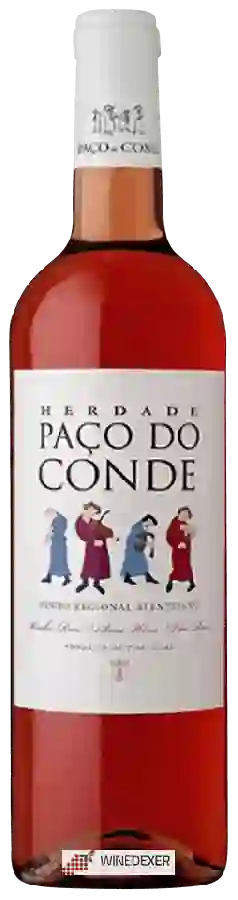
Winery Herdade Paço do CondeAlentejano Rosé
 Pink wine



This wine generally goes well with beef and mature and hard cheese.
Wine flavors and olphactive analysis


On the nose the Alentejano Rosé of Winery Herdade Paço do Conde in the region of Alentejano often reveals types of flavors of non oak, oak or black fruit.
Food and wine pairings with Alentejano Rosé
Pairings that work perfectly with Alentejano Rosé


Original food and wine pairings with Alentejano Rosé
The Alentejano Rosé of Winery Herdade Paço do Conde matches generally quite well with dishes of beef or mature and hard cheese such as recipes of fricandeaux german style or potato and st. nectaire pie.
Details and technical informations about Winery Herdade Paço do Conde's Alentejano Rosé.
Discover the grape variety: Touriga nacional
Most certainly Portuguese, not to be confused with the Touriga Franca also of the same origin. In Portugal, where it is widely cultivated, it is used to produce, among other things, the famous red Porto. It is also found in Uzbekistan, Australia, South Africa, Cyprus, Spain, etc... very little known in France, although it is listed in the Official Catalogue of A1 vines.
Last vintages of this wine
The best vintages of Alentejano Rosé from Winery Herdade Paço do Conde are 2017, 2012, 2011, 2016 and 2014.
Informations about the Winery Herdade Paço do Conde
The Winery Herdade Paço do Conde is one of of the world's greatest estates. It offers 32 wines for sale in the of Alentejano to come and discover on site or to buy online.

The wine region of Alentejano
Tejo">Alentejo is a well-known, highly respected wine region in eastern Portugal. This hot, Dry area covers approximately a third of the country and is best known for its red wine, the best of which are sold under the and Alentejo DOC (Denominacao de Origem Controlada) title. Wine from Alentejo is typically made from Aragonez (Tempranillo), Castelao, Trincadeira or a Rich, ripe, jammy blend of the three. Antao Vaz is the white variety of choice here, producing a good level of Acidity and tropical fruit flavors.
The word of the wine: Imperial
Bottle with a capacity of 6 liters (synonym of mathusalem).