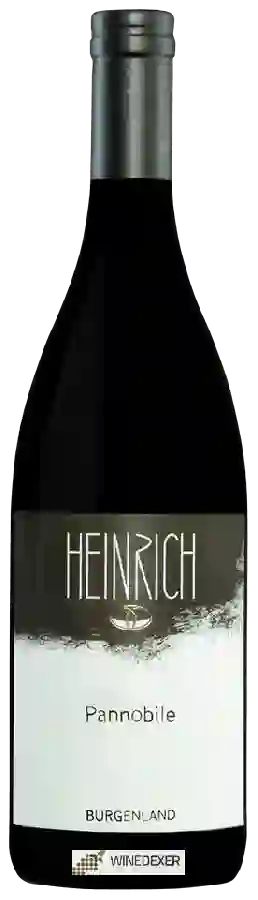
Winery HeinrichPannobile
 Red wine


This wine generally goes well with blue cheese, pork or rich fish (salmon, tuna etc).

Wine flavors and olphactive analysis






On the nose the Pannobile of Winery Heinrich in the region of Weinland often reveals types of flavors of non oak, earth or microbio and sometimes also flavors of vegetal, oak or tree fruit.
Food and wine pairings with Pannobile
Pairings that work perfectly with Pannobile



Original food and wine pairings with Pannobile


The Pannobile of Winery Heinrich matches generally quite well with dishes of lamb, pork or rich fish (salmon, tuna etc) such as recipes of lamb chops with spanish sauce, turkey stuffed with chestnuts or salmon steaks with soy sauce.
Details and technical informations about Winery Heinrich's Pannobile.
Discover the grape variety: Zweigelt
Supple and fruity reds with a vivid ruby colour, soft tannins and snappy acidity, with aromas of sour cherry, raspberry, red plum and gentle spices. Made as easy-drinking young reds and as more structured, oak-aged cellar wines. The most planted red variety in Austria (Burgenland, Carnuntum, Neusiedlersee), created in 1922 by Friedrich Zweigelt in Klosterneuburg, a cross of saint laurent × blaufränkisch.
Last vintages of this wine

The best vintages of Pannobile from Winery Heinrich are 2003, 2013, 2011, 2009 and 2008.
Informations about the Winery Heinrich
The Winery Heinrich is one of of the world's greatest estates. It offers 64 wines for sale in the of Burgenland to come and discover on site or to buy online.

The wine region of Burgenland
Cradle of great Austrian reds. Signature Blaufränkisch: structured, spicy reds with black fruits (blackberry, black cherry), firm tannins and lively acidity, mineral profile. More supple Zweigelt on red fruit. Lively Welschriesling, peppery Grüner Veltliner, round Chardonnay whites.
The wine region of Weinland
Vast German-speaking region in north-eastern Switzerland, the country's largest production area. Signature Pinot Noir (Blauburgunder): fine, fresh reds with notes of cherry, raspberry, undergrowth and sweet spices, silky tannins. Elegant, delicate style, often barrel-aged. Also light, floral Müller-Thurgau (Riesling-Sylvaner), lively, lemony native Räuschling, ample Pinot Gris.
The word of the wine: Residual sugars
Sugars not transformed into alcohol and naturally present in the wine. The perception of residual sugars is conditioned by the acidity of the wine. The more acidic the wine is, the less sweet it will seem, given the same amount of sugar.


