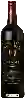
Château Haut GacherieBordeaux Supérieur
 Other wine
This wine generally goes well with poultry, beef or veal.
Food and wine pairings with Bordeaux Supérieur
Pairings that work perfectly with Bordeaux Supérieur



Original food and wine pairings with Bordeaux Supérieur

The Bordeaux Supérieur of Château Haut Gacherie matches generally quite well with dishes of beef, veal or game (deer, venison) such as recipes of spit-turned boar leg (oven) with "automatic watering"., veal roast casserole with mushrooms or duckling with bigarrade.
Details and technical informations about Château Haut Gacherie's Bordeaux Supérieur.
Discover the grape variety: Dolcetto nero
An Italian variety that is very present in Piedmont, it is also found in Argentina and France, where it is registered in the Official Catalogue of Wine Grape Varieties, list A1. Dolcetto nero would be the sweet black one. However, the one we encountered, both at Daumas-Gassac in Aniane in the Hérault and at Pouzols-Minervois in the Aude, does not have the same ampelographic characteristics: the first difference is that the petiolar point and the veins are wine red and not green like those of the douce noire.
Informations about the Château Haut Gacherie
The Château Haut Gacherie is one of of the world's greatest estates. It offers 2 wines for sale in the of Bordeaux to come and discover on site or to buy online.

The wine region of Bordeaux
Bordeaux, in southwestern France, is one of the most famous, prestigious and prolific wine regions in the world. The majority of Bordeaux wines (nearly 90% of the production Volume) are the Dry, medium and Full-bodied red Bordeaux blends for which it is famous. The finest (and most expensive) are the wines of the great châteaux of Haut-Médoc and the right bank appellations of Saint-Émilion and Pomerol. The former focuses (at the highest level) on Cabernet Sauvignon, the latter on Merlot.
The word of the wine: Viscosity
Consistency of wine reminiscent of the tactile sensation of sugar syrup with varying degrees of fluidity, due to the alcohol and natural sugar in the grapes present in sweet wines. In excess, this sensation can make the wine pasty and heavy. To the eye, viscosity is referred to as tears.