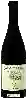
Château Haut BlanvilleRiva
 Red wine



In the mouth this red wine is a powerful with a nice balance between acidity and tannins.
This wine generally goes well with beef, veal or pasta.
Taste structure of the Riva from the Château Haut Blanville
Light | Bold | |
Smooth | Tannic | |
Dry | Sweet | |
Soft | Acidic |
In the mouth the Riva of Château Haut Blanville in the region of Languedoc-Roussillon is a powerful with a nice balance between acidity and tannins.
Food and wine pairings with Riva
Pairings that work perfectly with Riva



Original food and wine pairings with Riva
The Riva of Château Haut Blanville matches generally quite well with dishes of beef, pasta or veal such as recipes of brazilian feijoada, chinese fried shrimp ravioli or veal tagine with preserved lemons and saffron.
Details and technical informations about Château Haut Blanville's Riva.
Discover the grape variety: Marquette
Direct producer hybrid, interspecific cross between MN 1094 and Ravat noir obtained in 1989 by Peter Hemstad and James Luby at the University of Minnesota Research Center (United States). Note that it is the cousin of the black frontenac and the grandson of the pinot noir. It can be found in North America, Canada, ... in France it is almost unknown.
Informations about the Château Haut Blanville
The Château Haut Blanville is one of of the world's great estates. It offers 80 wines for sale in the of Languedoc-Roussillon to come and discover on site or to buy online.

The wine region of Languedoc-Roussillon
Languedoc (formerly Coteaux du Languedoc) is a key appellation used in the Languedoc-Roussillon wine region of southern France. It covers Dry table wines of all three colors (red, white and rosé) from the entire region, but leaves Sweet and Sparkling wines to other more specialized appellations. About 75% of all Languedoc wines are red, with the remaining 25% split roughly down the middle between whites and rosés. The appellation covers most of the Languedoc region and almost a third of all the vineyards in France.
The word of the wine: Classified growth
Place name or castle subject to a classification (Médoc classification of 1855, classified growths of Alsace...)