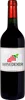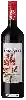
Winery Graf von RudesheimCaballero Tinto Trocken
 Red wine



In the mouth this red wine is a powerful.
This wine generally goes well with poultry, beef or veal.
Taste structure of the Caballero Tinto Trocken from the Winery Graf von Rudesheim
Light | Bold | |
Smooth | Tannic | |
Dry | Sweet | |
Soft | Acidic |
In the mouth the Caballero Tinto Trocken of Winery Graf von Rudesheim in the region of Vinos de Pago is a powerful.
Food and wine pairings with Caballero Tinto Trocken
Pairings that work perfectly with Caballero Tinto Trocken



Original food and wine pairings with Caballero Tinto Trocken

The Caballero Tinto Trocken of Winery Graf von Rudesheim matches generally quite well with dishes of beef, pasta or veal such as recipes of improved horse steak, seafood lasagna or veal grenadin with balsamic vinegar and honey.
Details and technical informations about Winery Graf von Rudesheim's Caballero Tinto Trocken.
Discover the grape variety: Manseng noir
Manseng noir is a grape variety from the western Pyrenees, close to tannat, a famous grape variety from southwest France. It is also called mansein, mansec or mancep in the Lot. It has been around since the 13th century and has given rise to Petit Manseng and Gros Manseng, two varieties of the same family but with quite different characteristics. Manseng noir remains essential for the AOC Béarn, where it is grown on about ten hectares. However, Manseng noir is a vigorous, productive and disease-resistant grape variety. It gives wines with a colourful robe, powerful, with aromas of black fruits and mushrooms, quite fine and with an interesting ageing potential.
Last vintages of this wine
The best vintages of Caballero Tinto Trocken from Winery Graf von Rudesheim are 0
Informations about the Winery Graf von Rudesheim
The Winery Graf von Rudesheim is one of of the world's greatest estates. It offers 47 wines for sale in the of Vinos de Pago to come and discover on site or to buy online.

The wine region of Vinos de Pago
Vinos de Pago, often abbreviated to VP, is a relatively New category of wine classification in Spain. It was introduced in 2003, to cover individual wineries whose wines fell outside the existing DO system (geographically or stylistically) but were nevertheless of consistently high quality. As of 2017, there were more than a dozen VPs, all of which are notable exceptions in regions not generally associated with high quality wines. More than half are in Castilla-La Mancha, and the rest in Navarra and Utiel-Requena.
The word of the wine: Hairy
A sensual and complete wine that leaves a sensation of balance and fullness in the mouth.