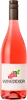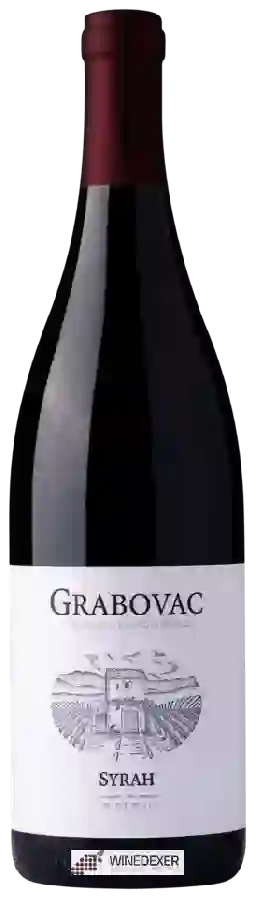
Winery GrabovacRiserva Syrah
 Red wine


In the mouth this red wine is a powerful with a nice freshness.
This wine generally goes well with beef, game (deer, venison) or lamb.

Taste structure of the Riserva Syrah from the Winery Grabovac
Light | Bold | |
Smooth | Tannic | |
Dry | Sweet | |
Soft | Acidic |
In the mouth the Riserva Syrah of Winery Grabovac in the region of Dalmatian Coast is a powerful with a nice freshness.
Food and wine pairings with Riserva Syrah
Pairings that work perfectly with Riserva Syrah



Original food and wine pairings with Riserva Syrah


The Riserva Syrah of Winery Grabovac matches generally quite well with dishes of beef, lamb or game (deer, venison) such as recipes of fillet of beef in a foie gras and truffle crust, gypsy sauce or rabbit with prunes.
Details and technical informations about Winery Grabovac's Riserva Syrah.
Discover the grape variety: Syrah
Structured, elegant reds with deep colour, firm tannins, with intense aromas of blackberry, blackcurrant, black pepper, violet, smoked meat, black olive and balsamic notes. Fine ageing potential. Star of the great northern Rhône reds (Côte-Rôtie, Hermitage, Cornas, Saint-Joseph) and pillar of GSM blends in the south (Châteauneuf-du-Pape). Widely exported to Australia as Shiraz (Barossa, McLaren Vale). Cross of dureza × mondeuse blanche.
Last vintages of this wine
The best vintages of Riserva Syrah from Winery Grabovac are 2020, 0
Informations about the Winery Grabovac
The Winery Grabovac is one of of the world's greatest estates. It offers 23 wines for sale in the of Dalmatian Coast to come and discover on site or to buy online.

The wine region of Dalmatian Coast
Croatia's Adriatic coast, native identity grapes in full revival. Signature Plavac Mali: powerful, sun-soaked reds with notes of candied blackberry, black plum, dried fig, garrigue, tobacco and spices, firm tannins and a warm palate — at its peak in Dingač and Postup (Pelješac). Also dense Babić. Ample, aromatic Pošip whites (pear, honey, fennel), lively Maraština, mineral Debit.
The word of the wine: Malolactic fermentation
Called second fermentation or malo for short. It is the degradation (under the effect of bacteria) of the malic acid naturally present in the wine into milder, less aggressive lactic acid. Some producers or wineries refuse this operation by "blocking the malo" (by cold and adding SO2) to keep a maximum of acidity which carries the aromas and accentuates the sensation of freshness.