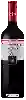
Winery GillmoreMariposa Rosado de Viejas
 Pink wine



This wine generally goes well with beef, lamb or mature and hard cheese.
The Mariposa Rosado de Viejas of the Winery Gillmore is in the top 90 of wines of Loncomilla Valley.
Food and wine pairings with Mariposa Rosado de Viejas
Pairings that work perfectly with Mariposa Rosado de Viejas



Original food and wine pairings with Mariposa Rosado de Viejas

The Mariposa Rosado de Viejas of Winery Gillmore matches generally quite well with dishes of beef, lamb or spicy food such as recipes of autumn beef bourguignon, shoulder of lamb boulangère or moroccan chicken tagine.
Details and technical informations about Winery Gillmore's Mariposa Rosado de Viejas.
Discover the grape variety: Malvoisie de Toscane
It was cultivated in ancient times and is believed to be of Greek origin. In Italy, associated with Trebbiano Toscano, it was used to produce the famous Chianti: these two white varieties are no longer part of the vineyard. In France, Tuscan Malvasia is practically unknown. It should be noted that many grape varieties have "malvasia" as a synonym, so confusion between them is always possible.
Last vintages of this wine
The best vintages of Mariposa Rosado de Viejas from Winery Gillmore are 2018, 0
Informations about the Winery Gillmore
The Winery Gillmore is one of of the world's great estates. It offers 10 wines for sale in the of Loncomilla Valley to come and discover on site or to buy online.

The wine region of Loncomilla Valley
The wine region of Loncomilla Valley is located in the region of Maule Valley of Central Valley of Chile. Wineries and vineyards like the Domaine Gillmore or the Domaine Cremaschi Furlotti produce mainly wines red, white and pink. The most planted grape varieties in the region of Loncomilla Valley are Cabernet-Sauvignon, Merlot and Carmenère, they are then used in wines in blends or as a single variety. On the nose of Loncomilla Valley often reveals types of flavors of oaky, earthy or dried fruit and sometimes also flavors of citrus fruit, vegetal or floral.
The wine region of Central Valley
The Central Valley (El Valle Central) of Chile is one of the most important wine-producing areas in South America in terms of Volume. It is also one of the largest wine regions, stretching from the Maipo Valley (just south of Santiago) to the southern end of the Maule Valley. This is a distance of almost 250 miles (400km) and covers a number of Climate types. The Central Valley wine region is easily (and often) confused with the geological Central Valley, which runs north–south for more than 620 miles (1000km) between the Pacific Coastal Ranges and the lower Andes.
The word of the wine: Côte des Blancs
One of the most famous terroirs of the Champagne region, from Épernay to Vertus, mainly devoted to Chardonnay, hence its name. The villages of Chouilly, Cramant, Cuis, Mesnil-sur-Oger, Avize, etc., lying on the chalk, are in a way to Champagne what Meursault, Chablis and Puligny are to Burgundy.