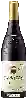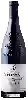
Gigondas La CaveLes Talus de Chancevigneys Gigondas
 Red wine
This wine generally goes well with beef, game (deer, venison) or lamb.
Food and wine pairings with Les Talus de Chancevigneys Gigondas
Pairings that work perfectly with Les Talus de Chancevigneys Gigondas



Original food and wine pairings with Les Talus de Chancevigneys Gigondas
The Les Talus de Chancevigneys Gigondas of Gigondas La Cave matches generally quite well with dishes of beef, lamb or game (deer, venison) such as recipes of monkfish (anglerfish) à la sétoise, ramadan berber soup (harira) or duck confit parmentier.
Details and technical informations about Gigondas La Cave's Les Talus de Chancevigneys Gigondas.
Discover the grape variety: Seibel 6468
Direct producer hybrid obtained by Albert Seibel (1844/1936), interbreeding between 4614 Seibel and 3011 Seibel. The 6468 Seibel was not multiplied very much, today it is not present in the vineyard anymore. It should be noted that it has been used in many other crosses to obtain, among others, the Villard blanc, the date tree of Saint Vallier, etc.
Informations about the Gigondas La Cave
The Gigondas La Cave is one of of the world's great estates. It offers 59 wines for sale in the of Gigondas to come and discover on site or to buy online.

The wine region of Gigondas
The wine region of Gigondas is located in the region of Rhône méridional of Rhone Valley of France. Wineries and vineyards like the Château de Saint Cosme or the Domaine la Bouissiere produce mainly wines red, pink and sparkling. The most planted grape varieties in the region of Gigondas are Mourvèdre, Cabernet-Sauvignon and Clairette, they are then used in wines in blends or as a single variety. On the nose of Gigondas often reveals types of flavors of butterscotch, butter or baking spice and sometimes also flavors of bay leaf, star anise or pomegranate.
The wine region of Rhone Valley
The Rhone Valley is a key wine-producing region in Southeastern France. It follows the North-south course of the Rhône for nearly 240 km, from Lyon to the Rhône delta (Bouches-du-Rhône), near the Mediterranean coast. The Length of the valley means that Rhône wines are the product of a wide variety of soil types and mesoclimates. The viticultural areas of the region cover such a distance that there is a widely accepted division between its northern and southern parts.
The word of the wine: Dosing liqueur (champagne)
Also known as liqueur d'expédition, a solution made up of wine and sugar added to champagne after disgorgement and which determines the type of wine: extra-brut, brut, extra-dry, dry, demi-sec.