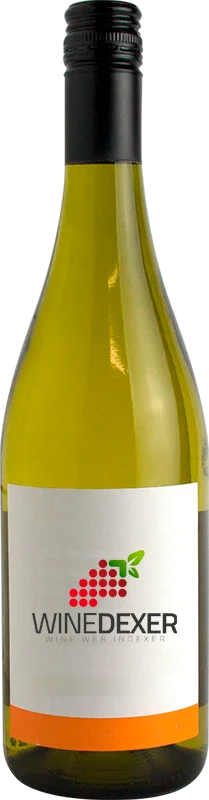
Winery Geisser SchweigenBlanc de Noir Trocken
 White wine
This wine generally goes well with pork, poultry or veal.
Food and wine pairings with Blanc de Noir Trocken
Pairings that work perfectly with Blanc de Noir Trocken



Original food and wine pairings with Blanc de Noir Trocken


The Blanc de Noir Trocken of Winery Geisser Schweigen matches generally quite well with dishes of veal, pork or game (deer, venison) such as recipes of veal axoa (basque country), endive frichti or aiguillettes of duck with auvergne blue cheese.
Details and technical informations about Winery Geisser Schweigen's Blanc de Noir Trocken.
Discover the grape variety: Pinot noir
Pinot noir is an important red grape variety in Burgundy and Champagne, and its reputation is well known! Great wines such as the Domaine de la Romanée Conti elaborate their wines from this famous grape variety, and make it a great variety. When properly vinified, pinot noit produces red wines of great finesse, with a wide range of aromas depending on its advancement (fruit, undergrowth, leather). it is also the only red grape variety authorized in Alsace. Pinot Noir is not easily cultivated beyond our borders, although it has enjoyed some success in Oregon, the United States, Australia and New Zealand.
Informations about the Winery Geisser Schweigen
The Winery Geisser Schweigen is one of of the world's great estates. It offers 28 wines for sale in the of Pfalz to come and discover on site or to buy online.

The wine region of Pfalz
Pfalz is a key wine producing region in western Germany, located between the Rhein/Rhine river and the low-lying Haardt mountain range (a natural continuation of the Alsatian Vosges). It covers a rectangle of land 45 miles (75km) Long and 15 miles (25km) wide. To the NorthLiesRheinhessen; to the South, the French border and Alsace. In terms of both quality and quantity, Pfalz is one of Germany's most important regions, and one which shows great promise for the future.
The word of the wine: Mouth
The mouth is the third stage of wine tasting after the eye and nose. In the mouth, the taster identifies the aromas through the retronasal route, the flavours and the texture. It is in the mouth that the overall balance of the wine is apprehended.