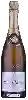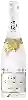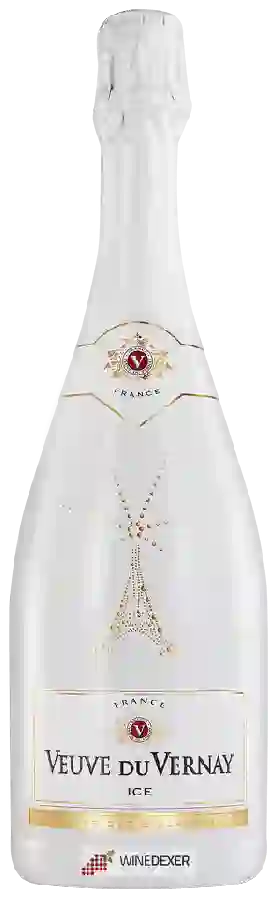
Winery Veuve du VernayIce
 Sparkling wine



In the mouth this sparkling wine is a powerful with a nice vivacity and a fine and pleasant bubble.
This wine generally goes well with poultry, appetizers and snacks or lean fish.
The Ice of the Winery Veuve du Vernay is in the top 70 of wines of Vin de France.

Taste structure of the Ice from the Winery Veuve du Vernay
Light | Bold | |
Soft | Acidic | |
Gentle | Fizzy |
In the mouth the Ice of Winery Veuve du Vernay in the region of Vin de France is a powerful with a nice vivacity and a fine and pleasant bubble.
Wine flavors and olphactive analysis




On the nose the Ice of Winery Veuve du Vernay in the region of Vin de France often reveals types of flavors of cherry, grapefruit or citrus and sometimes also flavors of peach, green apple or minerality.
Food and wine pairings with Ice
Pairings that work perfectly with Ice



Original food and wine pairings with Ice


The Ice of Winery Veuve du Vernay matches generally quite well with dishes of shellfish, poultry or appetizers and snacks such as recipes of lamb with okra sauce, baked chicken legs or tuna wraps.
Details and technical informations about Winery Veuve du Vernay's Ice.
Discover the grape variety: Semebat
Light, simple fruity reds with a pale, lightly coloured ruby, soft tannins and an airy palate with moderate acidity, undemonstrative red fruit aromas. Rustic, discreet profile. Almost extinct, preserved in INRAE varietal collections for its heritage value, testament to the pre-phylloxera ampelographic diversity of the South-West and studied among heritage varieties. Rare French black variety, once grown in the South-West.
Last vintages of this wine
The best vintages of Ice from Winery Veuve du Vernay are 2017, 2008, 2018, 2016 and 2011.
Informations about the Winery Veuve du Vernay
The Winery Veuve du Vernay is one of of the world's greatest estates. It offers 16 wines for sale in the of Vin de France to come and discover on site or to buy online.

The wine region of Vin de France
The freest category of French wine, the playground of winemakers working outside the AOC. All styles combined: fruity reds, lively or ambitious whites, everyday rosés, unusual blends, natural wines, atypical grapes (Petit Manseng in Languedoc, Riesling in Provence), experimental winemaking (skin-contact whites, no sulphur). Grape and vintage labelling allowed, no geographic constraint. From the pop, convivial cuvée to the artisan gem: freedom in a bottle.
The word of the wine: Chartreuse
In the Bordeaux region, small castle from the 18th or early 19th century.