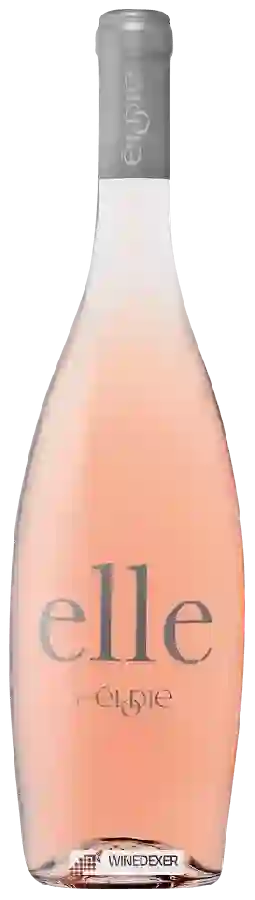
Domaine de CantarelleElle d'Élodie Rosé
 Pink wine


In the mouth this pink wine is a with a nice freshness.
This wine generally goes well with pork, vegetarian or poultry.

Taste structure of the Elle d'Élodie Rosé from the Domaine de Cantarelle
Light | Bold | |
Dry | Sweet | |
Soft | Acidic |
In the mouth the Elle d'Élodie Rosé of Domaine de Cantarelle in the region of Provence is a with a nice freshness.
Food and wine pairings with Elle d'Élodie Rosé
Pairings that work perfectly with Elle d'Élodie Rosé



Original food and wine pairings with Elle d'Élodie Rosé

The Elle d'Élodie Rosé of Domaine de Cantarelle matches generally quite well with dishes of pork, shellfish or vegetarian such as recipes of steamed pork chops, thai shrimp soup (tom yam goong) or quiche with leeks and fresh salmon from flo.
Details and technical informations about Domaine de Cantarelle's Elle d'Élodie Rosé.
Discover the grape variety: Dorona
Structured, marine dry whites with an intense golden robe, an ample palate with saline acidity. Signature aromas of candied citrus, yellow fruits, aromatic herbs and iodine notes from the Venetian lagoon. Singular profile. Symbol of lagoon viticulture, grown in tiny quantities on the islands of Mazzorbo and Sant'Erasmo by committed producers. A native Italian white grape from Veneto, nearly extinct, recently rediscovered.
Informations about the Domaine de Cantarelle
The Domaine de Cantarelle is one of of the world's great estates. It offers 44 wines for sale in the of Côtes de Provence to come and discover on site or to buy online.

The wine region of Côtes de Provence
World reference for pale, elegant rosé: salmon to onion-skin hue, notes of strawberry, pink grapefruit, white peach and flowers, fresh, dry, mineral palate, taut finish. 90% of output, the Provençal signature. Grenache, Cinsault, Syrah and native Tibouren in the blend. A few fleshy Mediterranean reds (Mourvèdre, Syrah) and saline Vermentino whites.
The wine region of Provence
World capital of dry, refined rosé (~90% of production). Pale rose-petal colour, delicate nose of fresh red fruits (strawberry, raspberry, redcurrant), citrus (pink grapefruit), white flowers and a mineral touch, taut and thirst-quenching palate — the Mediterranean aperitif par excellence. Blends of Grenache, Cinsault, Syrah, Tibouren and Mourvèdre. Fleshy Bandol reds from Mourvèdre (leather, garrigue, age-worthy), straight Cassis whites.
The word of the wine: Deposit
Solid particles that can naturally coat the bottom of a bottle of wine. It is rather a guarantee that the wine has not been mistreated: in fact, to avoid the natural deposit, rather violent processes of filtration or cold passage (- 7 or - 8 °C) are used in order to precipitate the tartar (the small white crystals that some people confuse with crystallized sugar: just taste to dissuade you from it)