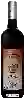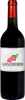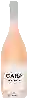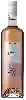
Château VillemagneEclat de Rosé Corbières
 Pink wine


In the mouth this pink wine is a with a nice freshness.
This wine generally goes well with vegetarian, appetizers and snacks or lean fish.
Taste structure of the Eclat de Rosé Corbières from the Château Villemagne
Light | Bold | |
Dry | Sweet | |
Soft | Acidic |
In the mouth the Eclat de Rosé Corbières of Château Villemagne in the region of Languedoc-Roussillon is a with a nice freshness.
Food and wine pairings with Eclat de Rosé Corbières
Pairings that work perfectly with Eclat de Rosé Corbières



Original food and wine pairings with Eclat de Rosé Corbières


The Eclat de Rosé Corbières of Château Villemagne matches generally quite well with dishes of pasta, vegetarian or appetizers and snacks such as recipes of eggplant and zucchini lasagna, vegan leek and tofu quiche or chorizo rillettes.
Details and technical informations about Château Villemagne's Eclat de Rosé Corbières.
Discover the grape variety: Merlot khantus
An interspecific cross between Merlot noir and Kozma 20-3 (also the same parents of Merlot khorus) obtained in 2002 by Simone Diego Castellarin and Guido Cipriani at the Institute of Applied Genomics in Udine, Italy. Merlot khantus is particularly resistant to mildew and tolerant to powdery mildew. Known in Italy ... almost unknown in France and not registered in the Official Catalogue of wine grape varieties.
Informations about the Château Villemagne
The Château Villemagne is one of of the world's greatest estates. It offers 10 wines for sale in the of Corbières to come and discover on site or to buy online.

The wine region of Corbières
Corbières is an important appellation in the Languedoc-roussillon">Languedoc-Roussillon region of southern France. It is one of the best known and most productive appellations in the Languedoc. The Corbières vineyards produce large quantities of red and rosé wines, as well as a growing number of white wines. The reds are the strongest Part of the appellation; they are reputedly Rich and herbal, made from Grenache, Syrah, Mourvèdre, Lledoner Pelut and Carignan.
The wine region of Languedoc-Roussillon
Languedoc (formerly Coteaux du Languedoc) is a key appellation used in the Languedoc-Roussillon wine region of southern France. It covers Dry table wines of all three colors (red, white and rosé) from the entire region, but leaves Sweet and Sparkling wines to other more specialized appellations. About 75% of all Languedoc wines are red, with the remaining 25% split roughly down the middle between whites and rosés. The appellation covers most of the Languedoc region and almost a third of all the vineyards in France.
The word of the wine: Pressing
Mechanical action consisting of pressing the grapes (before fermentation for whites) or the marc soaked in wine (after fermentation for reds).