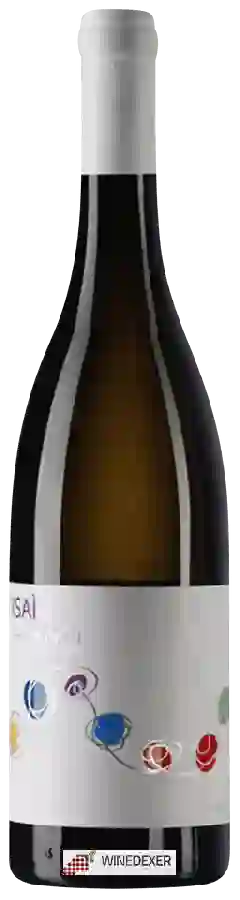
Winery FedericiIsaì Sauvignon
 White wine



In the mouth this white wine is a with a nice freshness.
This wine generally goes well with vegetarian, appetizers and snacks or lean fish.
Taste structure of the Isaì Sauvignon from the Winery Federici
Light | Bold | |
Dry | Sweet | |
Soft | Acidic |
In the mouth the Isaì Sauvignon of Winery Federici in the region of Lazio is a with a nice freshness.
Food and wine pairings with Isaì Sauvignon
Pairings that work perfectly with Isaì Sauvignon



Original food and wine pairings with Isaì Sauvignon


The Isaì Sauvignon of Winery Federici matches generally quite well with dishes of pasta, vegetarian or appetizers and snacks such as recipes of pasta gratin with courgettes and ham, mushroom, bacon and gruyere quiche or tuna rillettes.
Details and technical informations about Winery Federici's Isaì Sauvignon.
Discover the grape variety: Gold
Intraspecific crossing between A 3-94 (Hamburg Muscat x Sultana) and California K 3-78 (Hamburg Muscat x Queen of the Vines) obtained in the United States (California) in 1958 by Harold Paul Olmo (1909/2006). It can also be found in Greece, Cyprus, etc.
Last vintages of this wine
The best vintages of Isaì Sauvignon from Winery Federici are 0, 2018, 2015
Informations about the Winery Federici
The Winery Federici is one of of the world's great estates. It offers 44 wines for sale in the of Lazio to come and discover on site or to buy online.

The wine region of Lazio
Lazio is a region in CentralItaly, where the ancient capital of Rome is located. The region's reputation is based primarily on its white wines, the main varieties of which are Trebbiano, Malvasia di Candia and Malvasia Puntinata. Traditionally, these wines were fat, Round, abboccato and intended for immediate consumption. Today, the styles are lighter, drier and crisper thanks to modern winemaking methods.
The word of the wine: Effervescent
Any wine loaded with CO2 (carbon dioxide), which is revealed in the form of bubbles, reinforcing the freshness effect in the mouth. This gas production is the result of what is called the second fermentation in the bottle. It occurs in champagnes and sparkling wines such as crémants.