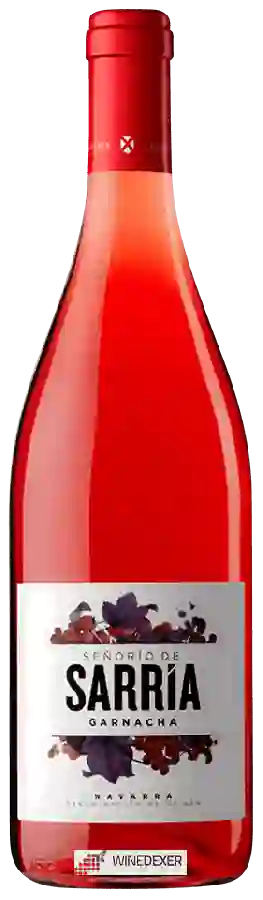
Winery Señorío de SarriaRosado
 Pink wine


This wine generally goes well with pork, beef or lamb.

Wine flavors and olphactive analysis




On the nose the Rosado of Winery Señorío de Sarria in the region of Navarre often reveals types of flavors of non oak, microbio or oak and sometimes also flavors of spices, red fruit or black fruit.
Food and wine pairings with Rosado
Pairings that work perfectly with Rosado



Original food and wine pairings with Rosado

The Rosado of Winery Señorío de Sarria matches generally quite well with dishes of beef, lamb or pork such as recipes of monkfish (anglerfish) à la sétoise, languedoc-roussillon lamb en papillote and its tajine with... or tartiflette.
Details and technical informations about Winery Señorío de Sarria's Rosado.
Discover the grape variety: Doçal de Refóios
Very fresh and light whites with a pale golden robe, airy palate with lively acidity, showing signature aromas of citrus (lemon), white flowers and nervous notes. Confidential heritage profile. Rare and confidential, it belongs to the heritage varieties preserved for their genetic and historical interest within the Vinho Verde DOC. Portuguese white autochtone variety from northern Minho, in the Lima sub-region.
Last vintages of this wine

The best vintages of Rosado from Winery Señorío de Sarria are 2014, 2011, 2019, 2018 and 2013.
Informations about the Winery Señorío de Sarria
The Winery Señorío de Sarria is one of of the world's great estates. It offers 31 wines for sale in the of Navarre to come and discover on site or to buy online.

The wine region of Navarre
Spanish reference for great Garnacha rosés: raspberry-pink colour, notes of crushed strawberry, cherry, citrus and white flowers, dry and gourmet palate. The emblematic grape (~70% of reds in the past), also in supple, sun-filled reds. Tempranillo on the rise in modern blends, fine spicy Graciano, Cabernet and Merlot. Fresh Chardonnay and Viura whites.
The word of the wine: Chaptalization
The addition of sugar at the time of fermentation of the must, an ancient practice, but theorized by Jean-Antoine Chaptal at the dawn of the 19th century. The sugar is transformed into alcohol and allows the natural degree of the wine to be raised in a weak or cold year, or - more questionably - when the winegrower has a harvest that is too large to obtain good maturity.