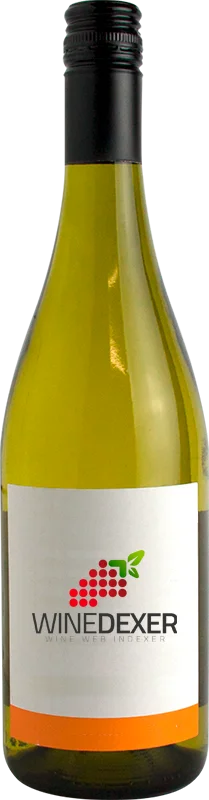
Winery ErbenMüller-Thurgau
 White wine
In the mouth this white wine is a .
This wine generally goes well with vegetarian, appetizers and snacks or lean fish.

Taste structure of the Müller-Thurgau from the Winery Erben
Light | Bold | |
Dry | Sweet | |
Soft | Acidic |
In the mouth the Müller-Thurgau of Winery Erben in the region of Mosel is a .
Food and wine pairings with Müller-Thurgau
Pairings that work perfectly with Müller-Thurgau



Original food and wine pairings with Müller-Thurgau


The Müller-Thurgau of Winery Erben matches generally quite well with dishes of shellfish, spicy food or vegetarian such as recipes of mussels with rosemary and barbecue, couscous without couscous maker or nanie's diced ham quiche.
Details and technical informations about Winery Erben's Müller-Thurgau.
Discover the grape variety: Müller-Thurgau
Light, aromatic whites with a tender palate and moderate acidity, with muscat-like aromas of white flowers, apple, citrus, peach and honeyed notes. Made as easy dry whites, popular semi-dry wines and some sparkling cuvées. Widely planted in Germany (Rheinhessen, Baden), northern Italy (Alto Adige, Trentino), Austria, Switzerland, Hungary and Japan. Cross of riesling × madeleine royale created in 1882 by Hermann Müller in Geisenheim.
Informations about the Winery Erben
The Winery Erben is one of of the world's great estates. It offers 60 wines for sale in the of Mosel to come and discover on site or to buy online.

The wine region of Mosel
Kingdom of lively, crystalline Riesling: citrus, green apple, gunflint, tangy tension and signature slate minerality. From light, fruity Kabinett to off-dry Spätlese, up to sweet Auslese and Trockenbeerenauslese of rare finesse. Some supple Müller-Thurgau and lively Elbling. Steeply sloped vineyards (up to 65% at the Bremmer Calmont) on blue and grey slate, 5,400 ha of Riesling (61.
The word of the wine: Cuvée
Often followed by a name that allows for recognition and identification, the word "cuvée" designates a specific wine within the production of a winemaker. This wine is characterized by a specific grape variety, a type of maturation and an organoleptic profile. All the vintages of a domain constitute a range.