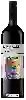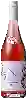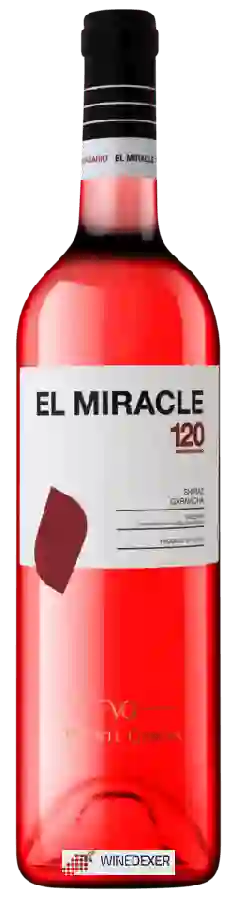
Winery El Miracle120 Anniversary Rosado
 Pink wine


This wine generally goes well with pork, beef or lamb.

Wine flavors and olphactive analysis


On the nose the 120 Anniversary Rosado of Winery El Miracle in the region of Valence often reveals types of flavors of red fruit.
Food and wine pairings with 120 Anniversary Rosado
Pairings that work perfectly with 120 Anniversary Rosado



Original food and wine pairings with 120 Anniversary Rosado


The 120 Anniversary Rosado of Winery El Miracle matches generally quite well with dishes of beef, lamb or pork such as recipes of beef with dark beer, lamb tagine with vegetables and sweet potatoes or pork chops with mustard.
Details and technical informations about Winery El Miracle's 120 Anniversary Rosado.
Discover the grape variety: Verdesse
Crisp, aromatic dry whites with a pale golden colour, a slender palate and preserved acidity, showing delicate aromas of citrus (lemon), white flowers (acacia, hawthorn), white fruits (apple, pear) and alpine mineral notes. A crystalline mountain character. Very rare, preserved by a handful of Dauphiné growers for its heritage value, in confidential high-altitude cuvées. Indigenous French variety of Isère and the Dauphiné, a witness to ancient Alpine grape varieties.
Last vintages of this wine
The best vintages of 120 Anniversary Rosado from Winery El Miracle are 2017, 0, 2014
Informations about the Winery El Miracle
The Winery El Miracle is one of of the world's great estates. It offers 18 wines for sale in the of Valence to come and discover on site or to buy online.

The wine region of Valence
Sunny Mediterranean Levant, sun-drenched accessible wines. Monastrell (Mourvèdre) star red in Alicante: fleshy and deep with black fruits, garrigue, leather and spice, firm tannins. Round, fruity Bobal from Utiel-Requena, supple Garnacha, juicy Tempranillo. Fresh whites: light Merseguera, aromatic Moscatel (fresh grape, flowers).
The word of the wine: Presses
The juice that results from pressing the grapes after fermentation. At the end of the maceration, the vats are emptied, the first juice obtained is called the free-run wine and the marc remaining at the bottom of the vat is then pressed to give the press wine. We say more quickly "the presses". Their quality varies according to the vintage and the maceration. A too vigorous extraction releases the tannins of pips and the wine of press can then prove to be very astringent. Often the winemaker raises it separately, deciding later whether or not to incorporate it totally or partially into the grand vin.