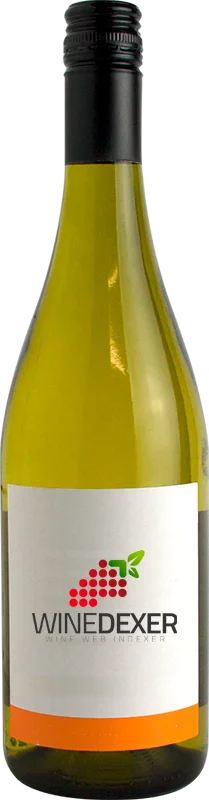
Winery DougosSauvignon Blanc - Roditis
 White wine



This wine generally goes well with vegetarian, rich fish (salmon, tuna etc) or shellfish.

Wine flavors and olphactive analysis

On the nose the Sauvignon Blanc - Roditis of Winery Dougos in the region of Thessalia often reveals types of flavors of tree fruit, tropical fruit.
Food and wine pairings with Sauvignon Blanc - Roditis
Pairings that work perfectly with Sauvignon Blanc - Roditis



Original food and wine pairings with Sauvignon Blanc - Roditis
The Sauvignon Blanc - Roditis of Winery Dougos matches generally quite well with dishes of rich fish (salmon, tuna etc), shellfish or vegetarian such as recipes of smoked salmon omelette, scallops with coconut cream or quiche without pastry, courgette and blue cheese.
Details and technical informations about Winery Dougos's Sauvignon Blanc - Roditis.
Discover the grape variety: Schoenburger
Aromatic and fruity whites with a pale golden hue, a supple palate with moderate acidity and signature Muscat aromas of rose, peach, white-fleshed fruits and light spice notes. Early-ripening and hardy. Grown in Germany, England and Canada, it adapts to northerly wine-growing climates. Synonym for Schönburger, a German variety obtained in 1979 at Geisenheim, a cross of Pinot Noir × Pirovano 1.
Last vintages of this wine
The best vintages of Sauvignon Blanc - Roditis from Winery Dougos are 0, 2018, 2010
Informations about the Winery Dougos
The Winery Dougos is one of of the world's greatest estates. It offers 23 wines for sale in the of Thessalia to come and discover on site or to buy online.

The wine region of Thessalia
Greek continental IGP (Larissa, Magnesia, Karditsa, Trikala) between Olympus, the Pindus and the Aegean, altitude vineyards, dry continental climate. Limniona signature indigenous red king in full revival: elegant and fresh with red cherry, raspberry, Mediterranean herbs, fine spices and floral touch, fine tannins and vibrant acidity — compared to Greek Pinot Noir. Structured Xinomavro in red, saline Assyrtiko and floral Malagousia in identity whites.
The word of the wine: Chaptalization
The addition of sugar at the time of fermentation of the must, an ancient practice, but theorized by Jean-Antoine Chaptal at the dawn of the 19th century. The sugar is transformed into alcohol and allows the natural degree of the wine to be raised in a weak or cold year, or - more questionably - when the winegrower has a harvest that is too large to obtain good maturity.