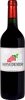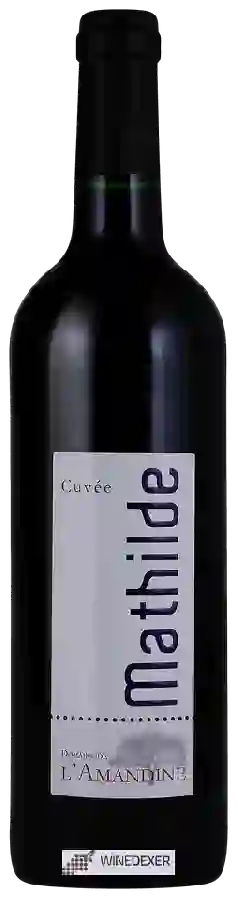
Domaine de l'AmandineCuvée Mathilde
 Red wine


This wine is a blend of 2 varietals which are the Caladoc and the Merlot.
This wine generally goes well with beef, game (deer, venison) or lamb.

Wine flavors and olphactive analysis



On the nose the Cuvée Mathilde of Domaine de l'Amandine in the region of Méditerranée often reveals types of flavors of tobacco, non oak or earth and sometimes also flavors of oak, red fruit.
Food and wine pairings with Cuvée Mathilde
Pairings that work perfectly with Cuvée Mathilde



Original food and wine pairings with Cuvée Mathilde


The Cuvée Mathilde of Domaine de l'Amandine matches generally quite well with dishes of beef, lamb or game (deer, venison) such as recipes of beef tongue with vegetables, risotto of penne with chorizo and merguez or duck aiguillettes with basalmic.
Details and technical informations about Domaine de l'Amandine's Cuvée Mathilde.
Discover the grape variety: Caladoc
Deeply coloured, structured reds with a dense purple robe, smooth tannins and a round palate, with aromas of blackberry, blackcurrant, plum, garrigue, spice and balsamic notes. Good short-to-medium ageing. Vinified in blends and as single varietal in IGP Pays d'Oc and Méditerranée (Languedoc-Roussillon, Provence), also adopted in Morocco, Tunisia, Israel and Spain. A Grenache × Malbec cross created in 1958 by Paul Truel in Montpellier (INRA).
Last vintages of this wine
The best vintages of Cuvée Mathilde from Domaine de l'Amandine are 2017, 2015, 2014, 2018 and 2016.
Informations about the Domaine de l'Amandine
The Domaine de l'Amandine is one of of the world's greatest estates. It offers 14 wines for sale in the of Vaucluse to come and discover on site or to buy online.

The wine region of Vaucluse
Vast southern IGP between Ventoux, Luberon and the Rhône: signature Grenache, Syrah and Mourvèdre as fruity, sun-drenched reds with notes of cherry, raspberry, blackberry, garrigue (thyme, rosemary), Mediterranean spices and a peppery touch, supple tannins and a moreish finish. Cinsault and Carignan in support. Signature fresh rosés (strawberry, citrus). Viognier, Grenache Blanc and Clairette in whites.
The wine region of Méditerranée
Vast IGP of south-east France (Provence, Vaucluse, Var, Corsica, Ardèche), 75% rosés. Fresh, fruity rosés with signature notes of strawberry, raspberry, citrus, white flowers and a Mediterranean touch, taut and thirst-quenching on the palate — the quintessential sunny aperitif. Supple reds blending Grenache, Syrah, Cabernet and Merlot (red fruits, garrigue, spice), full whites of Viognier (apricot, flowers) and Chardonnay. Generous everyday wines, expression of the south.
The word of the wine: Ban des vendanges
Date of the beginning of the grape harvest, fixed by the lord in the tradition of the Middle Ages and, today, by the prefect.