The Domaine de Gioielli of Corsica

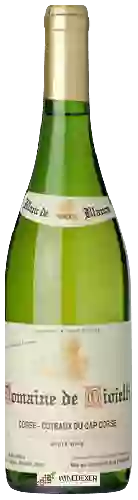
The Domaine de Gioielli is one of the best wineries to follow in Corse.. It offers 5 wines for sale in of Corsica to come and discover on site or to buy online.
Looking for the best Domaine de Gioielli wines in Corsica among all the wines in the region? Check out our tops of the best red, white or effervescent Domaine de Gioielli wines. Also find some food and wine pairings that may be suitable with the wines from this area. Learn more about the region and the Domaine de Gioielli wines with technical and enological descriptions.
How Domaine de Gioielli wines pair with each other generally quite well with dishes such as recipes .
On the nose the white wine of Domaine de Gioielli. often reveals types of flavors of earthy, earth.
Corsica is an island in the Mediterranean Sea, located between the southeast coast of Provence and the west coast of Tuscany. Although it is closer to Italy, Corsica has been under French rule since 1769 and is one of the 26 regions of France. The island's Italian origins are evident in its wines, which are mainly made from the classic Italian Grapes Vermentino and Sangiovese (known here as Rolle and Nielluccio respectively). Despite its remoteness, Corsican winemakers have amassed an impressive and diverse portfolio of grape varieties - there are very few places on earth where Pinot Noir, Tempranillo and Barbarossa grow side by side.
More than 40 of them, mostly of Spanish, Italian and French origin, are allowed to be used in quality wines. Despite this wonderful diversity, most of them are only used in IGP wines; only a small handful of varieties are used in Corsican AOC wines (see French wine labels). Just as Corsica's Italian history is evident in the local wines, so is the French connection. The classic grape varieties of southern France are all present here to some extent; Grenache is a main ingredient in many Corsican red wines, and Syrah, Mourvedre, Cinsaut and Carignan all play a supporting role.
How Domaine de Gioielli wines pair with each other generally quite well with dishes such as recipes .
Grenache noir is a grape variety that originated in Spain. It produces a variety of grape specially used for the elaboration of wine. It is rare to find this grape to eat on our tables. This variety of grape is characterized by medium to large bunches, and grapes of medium size. Grenache noir can be found in many vineyards: South West, Cognac, Bordeaux, Provence & Corsica, Languedoc & Roussillon, Rhone Valley, Loire Valley, Savoie & Bugey, Beaujolais.
How Domaine de Gioielli wines pair with each other generally quite well with dishes of beef, lamb or spicy food such as recipes of beef pot-au-feu, lamb mice confit in port wine or thai basil chicken.
On the nose the red wine of Domaine de Gioielli. often reveals types of flavors of red fruit.
A place for storing and ageing wines in bottles. This term designates both the cellar of a private individual and that of a restaurant. It is also a store dedicated to the retail sale of wine.
How Domaine de Gioielli wines pair with each other generally quite well with dishes of spicy food or sweet desserts such as recipes of chicken wrap or express cherry clafoutis.
The black Nielluccio is a grape variety originating from Italy. It produces a variety of grape specially used for the elaboration of wine. It is rare to find this grape to eat on our tables. The black Nielluccio can be found in several vineyards: Provence & Corsica, South-West, Cognac, Bordeaux, Languedoc & Roussillon, Rhone Valley, Loire Valley, Savoie & Bugey, Beaujolais.
Planning a wine route in the of Corsica? Here are the wineries to visit and the winemakers to meet during your trip in search of wines similar to Domaine de Gioielli.
White muscat is a white grape variety of Greek origin. Present in several Mediterranean vineyards, it has several synonyms such as muscat de Die, muscat blanc and frontignac. In France, it occupies a little less than 7,000 ha out of a total of 45,000 ha worldwide. Its young shoots are downy. Its youngest leaves are shiny, bronzed and scabrous. The berries and bunches of this variety are all medium-sized. The flesh of the berries is juicy, sweet and firm. Muscat à petits grains has a second ripening period and buds early in the year. It is moderately vigorous and must be pruned short. It likes poor, stony slopes. This variety is often exposed to spring frosts. It fears mildew, wasps, grape worms, court-noué, grey rot and powdery mildew. Muscat à petits grains is used to make rosé wines and dry white wines. Orange, brown sugar, barley sugar and raisins are the known aromas of these wines.