The Domaine de Beauséjour of Corbières of Languedoc-Roussillon
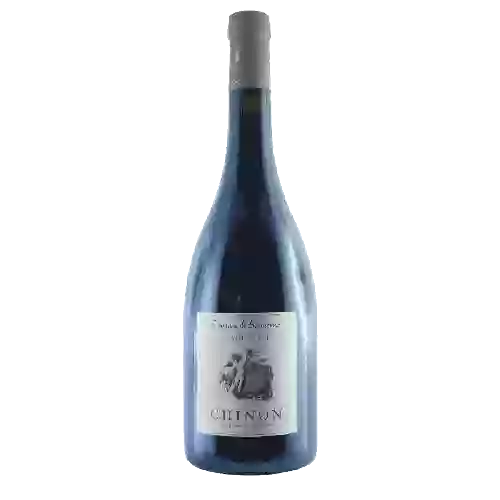
Domaine de Beauséjour
The winery offers 10 different wines
3.5


Note - 1Note - 1Note - 1Note - 0.5Note - 0
Its wines get an average rating of 3.5.
It is ranked in the top 110 of the estates of Languedoc-Roussillon.
It is located in Corbières in the region of Languedoc-Roussillon

The Domaine de Beauséjour is one of the best wineries to follow in Corbières.. It offers 10 wines for sale in of Corbières to come and discover on site or to buy online.

Top Domaine de Beauséjour wines

Looking for the best Domaine de Beauséjour wines in Corbières among all the wines in the region? Check out our tops of the best red, white or effervescent Domaine de Beauséjour wines. Also find some food and wine pairings that may be suitable with the wines from this area. Learn more about the region and the Domaine de Beauséjour wines with technical and enological descriptions.

The top pink wines of Domaine de Beauséjour

Food and wine pairings with a pink wine of Domaine de Beauséjour

How Domaine de Beauséjour wines pair with each other generally quite well with dishes of beef, pork or game (deer, venison) such as recipes of slow-cooked fillet of beef, pork roll with tomato sauce or duck breast with honey-orange sauce.

The grape varieties most used in the pink wines of Domaine de Beauséjour.

  • Cabernet Franc

Discovering the wine region of Corbières

Corbières is an important appellation in the Languedoc-roussillon">Languedoc-Roussillon region of southern France. It is one of the best known and most productive appellations in the Languedoc. The Corbières vineyards produce large quantities of red and rosé wines, as well as a growing number of white wines. The reds are the strongest Part of the appellation; they are reputedly Rich and herbal, made from Grenache, Syrah, Mourvèdre, Lledoner Pelut and Carignan.

The rosé wines of the Corbières are also very famous, made from the same red grape varieties, combined with Grenache Gris and Picpoul. White wines represent only a small percentage of the total production. They are made from a wide selection of grape varieties - notably Bourboulenc, Grenache Blanc, Maccabeu, Marsanne and Roussanne. The appellation has about 2,200 winegrowers, nearly 300 private producers and more than 30 cooperatives.

The top red wines of Domaine de Beauséjour

Food and wine pairings with a red wine of Domaine de Beauséjour

How Domaine de Beauséjour wines pair with each other generally quite well with dishes of beef, pork or game (deer, venison) such as recipes of beef colombo bourguignon style, salty crumble with courgettes, goat cheese and bacon or rabbit with kriek and cherries.

Organoleptic analysis of red wines of Domaine de Beauséjour

On the nose the red wine of Domaine de Beauséjour. often reveals types of flavors of cherry, oaky or earthy and sometimes also flavors of blackberry, minerality or tobacco. In the mouth the red wine of Domaine de Beauséjour. is a powerful with a nice balance between acidity and tannins.

The best vintages in the red wines of Domaine de Beauséjour

  • 2005With an average score of 4.00/5
  • 2017With an average score of 3.70/5
  • 2016With an average score of 3.63/5
  • 2010With an average score of 3.60/5
  • 2009With an average score of 3.50/5
  • 2008With an average score of 3.50/5

The grape varieties most used in the red wines of Domaine de Beauséjour.

  • Cabernet Franc
  • Shiraz/Syrah
  • Grenache
  • Carignan

Discover the grape variety: Marsanne

Marsanne is a white grape variety that originated in Montélimar in the Drôme, several centuries ago. Marsanne is also found in Cassis, Savoie, Languedoc-Roussillon and Saint-Péray in the Ardèche, where it produces remarkable sparkling wines. The warm, sunny climate of the Rhone Valley, Languedoc-Roussillon and Provence, as well as the dry, stony soil, are ideal conditions for its development. Its bunches are quite large and provide small, juicy berries that are sensitive to grey rot and strong winds. These two grape varieties complement each other perfectly: together they give light wines with little acidity, aromas of yellow fruit, white fruit and flowers with notes of honey and liquorice. This is for example what the appellations Saint-Péray, Hermitage, Crozes-Hermitage, Saint-Joseph, Côtes-du-Vallée du Rhône, Corbières, or Cassis express... which represent about 700 hectares.

The top white wines of Domaine de Beauséjour

Food and wine pairings with a white wine of Domaine de Beauséjour

How Domaine de Beauséjour wines pair with each other generally quite well with dishes of pasta, vegetarian or poultry such as recipes of multicoloured butterfly pasta, leek, goat cheese and bacon quiche or turkey cutlets with feta and cherry tomatoes.

The grape varieties most used in the white wines of Domaine de Beauséjour.

  • Roussanne
  • Marsanne
  • Bourboulenc

The word of the wine: Cuvée (champagne)

Juice harvested during the first pressing. The term "cuvée" is also used to describe the final blend of wines of a given quality. Tête de cuvée : the first juice to come out during the first pressing.

Discover other wineries and winemakers neighboring the Domaine de Beauséjour

Planning a wine route in the of Corbières? Here are the wineries to visit and the winemakers to meet during your trip in search of wines similar to Domaine de Beauséjour.

Discover the grape variety: Bourboulenc

Bourboulenc is mainly grown in the southern part of France. It is a white grape variety that ripens quite late. It can only be harvested around 25 September and for an average of only one month. Bourboulenc is particularly fond of low-lying, but at the same time warm and dry locations. The aroma of this grape variety is not very pronounced, but it has a certain exotic fruit and floral aroma such as broom. The result is a low alcohol wine with subtle and fleeting aromas. Blanquette, bourboulanc, bourboulenque, doucillon, clairette dorée and clairette blanche are all names that can designate bourboulenc. This grape variety is very sensitive to diseases common to all vine plants such as magnesium deficiency, mildew and oidium. Bourboulenc can be used as a table grape. Most French people keep the bunches until Christmas in order to present them on the festive table as desserts.