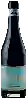
Winery Cota 45Pandorga Esencia de Pedro Ximénez
 Natural sweet wine


In the mouth this natural sweet wine is a powerful mainly marked by the residual sugar.
This wine generally goes well with blue cheese and sweet desserts.
The Pandorga Esencia de Pedro Ximénez of the Winery Cota 45 is in the top 50 of wines of Vinos de Pago.
Taste structure of the Pandorga Esencia de Pedro Ximénez from the Winery Cota 45
Light | Bold | |
Dry | Sweet | |
Soft | Acidic |
In the mouth the Pandorga Esencia de Pedro Ximénez of Winery Cota 45 in the region of Vinos de Pago is a powerful mainly marked by the residual sugar.



Food and wine pairings with Pandorga Esencia de Pedro Ximénez
Pairings that work perfectly with Pandorga Esencia de Pedro Ximénez


Original food and wine pairings with Pandorga Esencia de Pedro Ximénez
The Pandorga Esencia de Pedro Ximénez of Winery Cota 45 matches generally quite well with dishes of sweet desserts or blue cheese such as recipes of grandma's cherry clafoutis or rabbit casserole with blue cheese and dried fruit.
Details and technical informations about Winery Cota 45's Pandorga Esencia de Pedro Ximénez.
Discover the grape variety: Othello
Interspecific cross between the Clinton and the frankenthal or black-hamburg obtained in 1859 by Charles Arnold of Paris in Canada (Brant County in Ontario). In France, it is one of the six hybrids prohibited since 1935 (included in the European regulations): the Clinton, the Herbemont, the Isabelle, the Jacquez, the Noah and the Othello. It has been used as a sire in several crosses, notably by Couderc and Seibel. Today, the Othello has practically disappeared.
Last vintages of this wine

The best vintages of Pandorga Esencia de Pedro Ximénez from Winery Cota 45 are 2015, 0, 2018
Informations about the Winery Cota 45
The Winery Cota 45 is one of of the world's greatest estates. It offers 12 wines for sale in the of Vinos de Pago to come and discover on site or to buy online.

The wine region of Vinos de Pago
Vinos de Pago, often abbreviated to VP, is a relatively New category of wine classification in Spain. It was introduced in 2003, to cover individual wineries whose wines fell outside the existing DO system (geographically or stylistically) but were nevertheless of consistently high quality. As of 2017, there were more than a dozen VPs, all of which are notable exceptions in regions not generally associated with high quality wines. More than half are in Castilla-La Mancha, and the rest in Navarra and Utiel-Requena.
The word of the wine: Stamping
Marking of corks, barrels or cases with an iron.