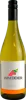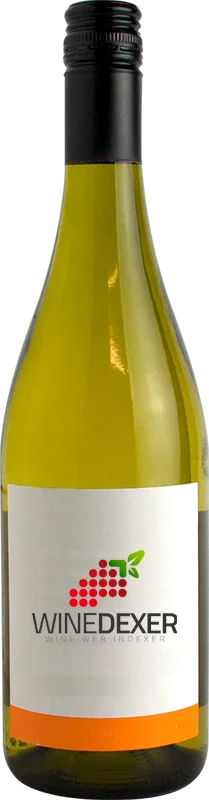
Winery Cellars 33Clay Station Vineyard Grenache Blanc
 White wine



This wine generally goes well with poultry, rich fish (salmon, tuna etc) or shellfish.

Food and wine pairings with Clay Station Vineyard Grenache Blanc
Pairings that work perfectly with Clay Station Vineyard Grenache Blanc



Original food and wine pairings with Clay Station Vineyard Grenache Blanc
The Clay Station Vineyard Grenache Blanc of Winery Cellars 33 matches generally quite well with dishes of rich fish (salmon, tuna etc), shellfish or poultry such as recipes of codfish portuguese style, pasta with vongoles (flat clams) or stuffed squid in the sétoise sauce.
Details and technical informations about Winery Cellars 33's Clay Station Vineyard Grenache Blanc.
Discover the grape variety: Villard noir
Colored, fruity reds with an intense ruby robe, smooth tannins and a supple palate, with simple aromas of red fruits (cherry, raspberry), soft spices and hybrid notes. Productive, disease-resistant profile for early drinking. Now marginal in France, surviving in a few heritage plots and varietal collections, important in post-phylloxera reconstruction. French black hybrid obtained by Bertille Seyve at Bourgoin-Jallieu (Seyve-Villard 18-315).
Last vintages of this wine
The best vintages of Clay Station Vineyard Grenache Blanc from Winery Cellars 33 are 0
Informations about the Winery Cellars 33
The Winery Cellars 33 is one of of the world's greatest estates. It offers 19 wines for sale in the of Lodi to come and discover on site or to buy online.

The wine region of Lodi
Self-proclaimed world capital of Zinfandel (>40% of premium Californian production): old-vine red king (plantings from 1888) — opulent and jammy with notes of blackberry, plum, raspberry, pepper, liquorice and a tobacco touch, coated tannins. Cabernet, Syrah, Merlot, Tempranillo, Albariño, Barbera and Primitivo in the palette (>100 grapes). Viognier and Chardonnay in whites. Central Californian AVA (1986) east of the bay, Mediterranean climate tempered by the delta.
The wine region of California
Powerful, sunny reds: dense Napa Cabernet Sauvignon (blackcurrant, chocolate, tobacco, ample tannins), spicy, jammy Zinfandel from the Sierra Foothills, silky red-fruited Pinot Noir on the cool coast (Sonoma, Russian River, Central Coast). Opulent, buttery Chardonnay, notes of yellow fruit and vanilla. Varied climate, from the hot interior to the Pacific-cooled coast. 80% of US production, 139 AVAs including Napa (1st AVA, 1981).
The word of the wine: Tanin
A natural compound contained in the skin of the grape, the seed or the woody part of the bunch, the stalk. The maceration of red wines allows the extraction of tannins, which give the texture, the solidity and also the mellowness when the tannins are "ripe". The winemaker seeks above all to extract the tannins from the skin, the ripest and most noble. The tannins of the seed or stalk, which are "greener", especially in average years, give the wine hardness and astringency. The wines of Bordeaux (based on Cabernet and Merlot) are full of tannins, those of Burgundy much less so, with Pinot Noir containing little.