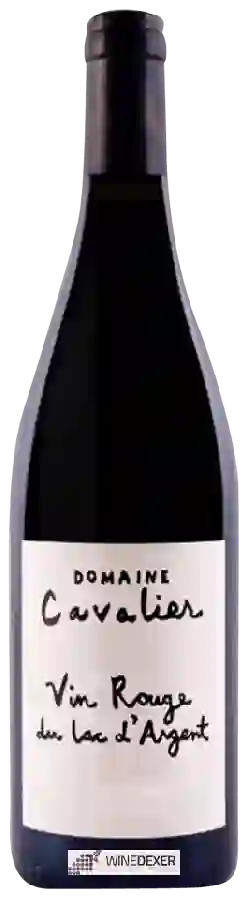
Domaine CavalierVin Rouge du lac d'Argent
 Red wine



In the mouth this red wine is a powerful with a nice balance between acidity and tannins.
This wine generally goes well with beef, veal or pasta.

Taste structure of the Vin Rouge du lac d'Argent from the Domaine Cavalier
Light | Bold | |
Smooth | Tannic | |
Dry | Sweet | |
Soft | Acidic |
In the mouth the Vin Rouge du lac d'Argent of Domaine Cavalier in the region of Languedoc-Roussillon is a powerful with a nice balance between acidity and tannins.
Food and wine pairings with Vin Rouge du lac d'Argent
Pairings that work perfectly with Vin Rouge du lac d'Argent



Original food and wine pairings with Vin Rouge du lac d'Argent
The Vin Rouge du lac d'Argent of Domaine Cavalier matches generally quite well with dishes of beef, pasta or veal such as recipes of venison leg in casserole, pasta with avocado or veal curry.
Details and technical informations about Domaine Cavalier's Vin Rouge du lac d'Argent.
Discover the grape variety: Calitor gris
Light, pale and lightly coloured whites and rosés with a pale golden to salmon colour, a light, low-alcohol palate and discreet aromas of white flowers, light red fruits and neutral notes. An easy-drinking profile. Now marginal, found only in ampelographic collections or with a few passionate growers in the Var. Grey-skinned mutation of Calitor, a traditional southern variety once widespread in Provence.
Last vintages of this wine
The best vintages of Vin Rouge du lac d'Argent from Domaine Cavalier are 2014
Informations about the Domaine Cavalier
The Domaine Cavalier is one of of the world's greatest estates. It offers 4 wines for sale in the of Languedoc-Roussillon to come and discover on site or to buy online.

The wine region of Languedoc-Roussillon
Largest single French vineyard, dominated by sunny, generous reds. Spicy Syrah, candied Grenache (ripe fruit, garrigue), structured Carignan, deep Mourvèdre, supple Cinsault. Stars: structured Corbières, Minervois, Faugères, Saint-Chinian; round Côtes-du-Roussillon. Legendary vins doux naturels: Banyuls and Maury (fortified Grenache) with notes of cocoa, fig, prune.
The word of the wine: Muscat blanc à petits grains
A white grape variety cultivated since antiquity on the shores of the Mediterranean, it is considered the noblest of the muscats. It is mainly used to make sweet wines, often from mutage. In France, it is the sole variety used in many natural sweet wines: muscat-de-frontignan, muscat-de-mireval, muscat-de-lunel, muscat-de-saint-jean-de-minervois, muscat-de-beaumes-de-venise, muscat-du-cap-corse. Combined with Muscat d'Alexandrie, it gives Muscat-de-Rivesaltes. It is also used to make sparkling white wines (clairette-de-die; moscato d'asti and asti spumante in Italy) and dry wines (alsace-muscat). Powerfully aromatic and complex, its wines evoke fresh grapes, roses, exotic fruits, citrus fruits and spices.


