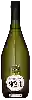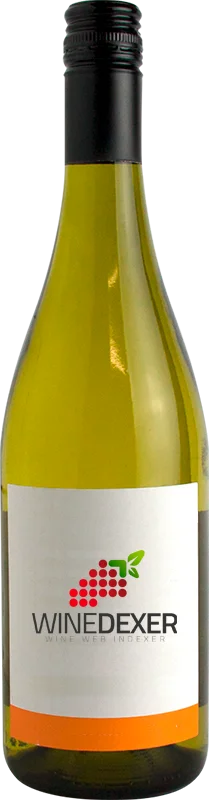
Winery BlasonCasa In Bruma No. 23 Friulano
 White wine



In the mouth this white wine is a powerful.
This wine generally goes well with lean fish, shellfish or mature and hard cheese.
Taste structure of the Casa In Bruma No. 23 Friulano from the Winery Blason
Light | Bold | |
Dry | Sweet | |
Soft | Acidic |
In the mouth the Casa In Bruma No. 23 Friulano of Winery Blason in the region of Friuli-Venezia Giulia is a powerful.
Food and wine pairings with Casa In Bruma No. 23 Friulano
Pairings that work perfectly with Casa In Bruma No. 23 Friulano



Original food and wine pairings with Casa In Bruma No. 23 Friulano


The Casa In Bruma No. 23 Friulano of Winery Blason matches generally quite well with dishes of pasta, shellfish or mature and hard cheese such as recipes of pasta with puttanesca sauce, fondue with lao sukiyaki sauce (laos) or savoyard fondue (but succulent).
Details and technical informations about Winery Blason's Casa In Bruma No. 23 Friulano.
Discover the grape variety: Pinotin
Swiss interspecific cross obtained in 1991 by Valentin Blattner. The parents would be pinot noir and an interspecific variety resistant to diseases and, for others, it would be a cross between cabernet-sauvignon and ((sylvaner x riesling) x (12 417 Seyve-Villard x 7053 Seibel)) see graph www.winogrona.org. No resistance gene could be identified for either mildew or powdery mildew. It can be found in Switzerland, Belgium, Holland, Germany, ... still little known in France.
Last vintages of this wine
The best vintages of Casa In Bruma No. 23 Friulano from Winery Blason are 0
Informations about the Winery Blason
The Winery Blason is one of of the world's great estates. It offers 23 wines for sale in the of Friuli-Venezia Giulia to come and discover on site or to buy online.

The wine region of Friuli-Venezia Giulia
Friuli-Venezia Giulia is an autonomous region in Italy, located in the extreme Northeast of the country, bordered by Austria and Slovenia to the north and east respectively. The eponymous wine region has four DOCGs, twelve DOCs and three PGIs and is best known for its white wine production. 77% of the region's wines are white, one of the highest proportions of any Italian region. The region's wines are distinctly different from other Italian wines in that they are made from non-traditional Grape varieties such as Sauvignon blanc, Riesling and Pinot blanc, as well as typically Italian varieties such as pinot gris and picolit.
The word of the wine: Ploussard
See poulsard.