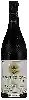
Domaine ArsacLes Galets de La Condamine Syrah - Grenache
 Red wine



This wine generally goes well with beef, lamb or mature and hard cheese.
Food and wine pairings with Les Galets de La Condamine Syrah - Grenache
Pairings that work perfectly with Les Galets de La Condamine Syrah - Grenache



Original food and wine pairings with Les Galets de La Condamine Syrah - Grenache

The Les Galets de La Condamine Syrah - Grenache of Domaine Arsac matches generally quite well with dishes of beef, lamb or spicy food such as recipes of beef with balsamic sauce, lamb roast with lavender or grilled pork ribs with barbecue sauce.
Details and technical informations about Domaine Arsac's Les Galets de La Condamine Syrah - Grenache.
Discover the grape variety: Colombard
Colombard is one of the oldest grape varieties in the Charentes. This golden white grape variety is a cross between Chenin and Gouais. The young leaves of colombard are yellow with bronze patches. The adult leaves may be three-lobed or whole, depending on the variety. Its branches are cottony. The bunches of this variety are thick and cylindrical. Its elliptical berries are medium-sized. They change color until they ripen, ranging from greenish white to golden yellow. Colombard is associated with an average budding. It is particularly susceptible to leafhoppers, grape worms, mites, mildew, powdery mildew and gray mold. It is also sensitive to water stress, but is not very sensitive to wind. It ripens late in the second half of the year. There are a dozen approved clones of Colombard, the best known of which are 608, 607 and 606. This variety produces a full-bodied, fine white wine. Aromas of lime, nectarine, boxwood, citrus and exotic fruits are released.
Last vintages of this wine
The best vintages of Les Galets de La Condamine Syrah - Grenache from Domaine Arsac are 2015, 2019, 2016, 2018 and 2014.
Informations about the Domaine Arsac
The Domaine Arsac is one of of the world's greatest estates. It offers 16 wines for sale in the of Rhone Valley to come and discover on site or to buy online.

The wine region of Rhone Valley
The Rhone Valley is a key wine-producing region in Southeastern France. It follows the North-south course of the Rhône for nearly 240 km, from Lyon to the Rhône delta (Bouches-du-Rhône), near the Mediterranean coast. The Length of the valley means that Rhône wines are the product of a wide variety of soil types and mesoclimates. The viticultural areas of the region cover such a distance that there is a widely accepted division between its northern and southern parts.
The word of the wine: Confit
Said of red wines that offer a very ripe nose of red and black fruits reminiscent of jam. On the palate, these aromas are dominant, the wine is very fleshy and round, and leaves an impression of sweetness on the finish that weighs it down.