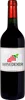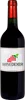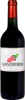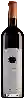
Winery DelmonteProvincia Di Pavia Barbera
 Red wine



This wine generally goes well with pork, poultry or mild and soft cheese.
Food and wine pairings with Provincia Di Pavia Barbera
Pairings that work perfectly with Provincia Di Pavia Barbera



Original food and wine pairings with Provincia Di Pavia Barbera

The Provincia Di Pavia Barbera of Winery Delmonte matches generally quite well with dishes of pork, spicy food or poultry such as recipes of new york hot dog, white beans with tomato (italy) or fish and chips (english batter).
Details and technical informations about Winery Delmonte's Provincia Di Pavia Barbera.
Discover the grape variety: Irsay Oliver
Obtained in Hungary in 1930 by Pal Kocsis by crossing the pozsonyi fehér (pressburger or white presburg) and the pearl of Csaba. This double-ended variety is found in Hungary, Ukraine, Russia, the Slovak Republic (small Carpathians), the Czech Republic (Moravia), etc. It is virtually unknown in France.
Informations about the Winery Delmonte
The Winery Delmonte is one of of the world's greatest estates. It offers 5 wines for sale in the of Provence to come and discover on site or to buy online.

The wine region of Provence
Provence is a wine region in the far southeast of France, best known for the quality (and quantity) of its rosé wines and for its Warm, mild Climate. The modernization that is taking place in many of the traditional wine regions of southern France has not yet taken place to the same extent in Provence, but there are Clear signs of change. The region's Grape varieties, in particular, have come under scrutiny in recent decades. Traditional varieties such as Carignan, Barbaroux (Barbarossa from Sardinia) and Calitor are being replaced by more commercially viable varieties such as Grenache, Syrah and even Cabernet Sauvignon.
The word of the wine: Chaptalization
The addition of sugar at the time of fermentation of the must, an ancient practice, but theorized by Jean-Antoine Chaptal at the dawn of the 19th century. The sugar is transformed into alcohol and allows the natural degree of the wine to be raised in a weak or cold year, or - more questionably - when the winegrower has a harvest that is too large to obtain good maturity.