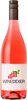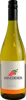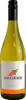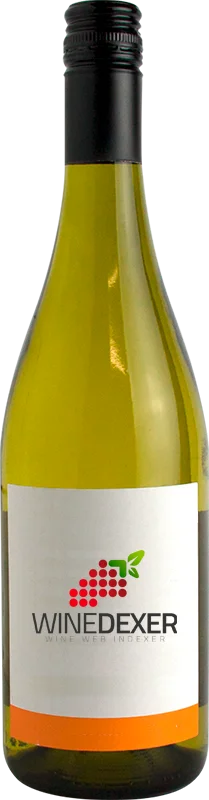
Winery DACBalada Alb Sec
 White wine



This wine generally goes well with vegetarian, rich fish (salmon, tuna etc) or shellfish.
Wine flavors and olphactive analysis

On the nose the Balada Alb Sec of Winery DAC in the region of Moldavie often reveals types of flavors of tree fruit, citrus fruit.
Food and wine pairings with Balada Alb Sec
Pairings that work perfectly with Balada Alb Sec



Original food and wine pairings with Balada Alb Sec
The Balada Alb Sec of Winery DAC matches generally quite well with dishes of rich fish (salmon, tuna etc), shellfish or vegetarian such as recipes of tuna provencal style, grilled lobster with tarragon cream sauce or cream and tuna quiche.
Details and technical informations about Winery DAC's Balada Alb Sec.
Discover the grape variety: Bianca
Complex interspecific crossing between 12375 Seyve-Villard (2 Eger) and Bouvier - a variety of Austrian origin - obtained in 1963 and in Hungary by Csizmazia Jozsef and Bereznai Laszlo. It should be noted that Bianca, a monogenic variety, which is nevertheless resistant to certain cryptogamic diseases, was "bypassed" in 2010 by a less resistant strain of mildew, which was also the case for Regent. It can be found in the United States, Serbia, Hungary, Austria, Italy, Switzerland, ... almost unknown in France. In these countries, it is certainly the most cultivated as a wine grape but it can also be found on the markets.
Last vintages of this wine
The best vintages of Balada Alb Sec from Winery DAC are 2016, 0, 2017
Informations about the Winery DAC
The Winery DAC is one of of the world's greatest estates. It offers 14 wines for sale in the of Moldavie to come and discover on site or to buy online.

The wine region of Moldavie
Ancestral vineyard with identity grapes. Fetească Neagră, great Moldovan red reference: deep with notes of ripe plum, black cherry, spice and tobacco, melted tannins. Lighter, more floral Rară Neagră (Băbească). Dense tinctorial Saperavi.
The word of the wine: Deposit
Solid particles that can naturally coat the bottom of a bottle of wine. It is rather a guarantee that the wine has not been mistreated: in fact, to avoid the natural deposit, rather violent processes of filtration or cold passage (- 7 or - 8 °C) are used in order to precipitate the tartar (the small white crystals that some people confuse with crystallized sugar: just taste to dissuade you from it)